Category

News

Two Gorizias – one city

By News

A historic moment is now behind us – the opening of the first cross-border European Capital of Culture 2025 Nova Gorica – Gorizia. It was culture and art that have united the cities which have been divided since 1947. The border seems to be non-existent, although everyone knows that this work towards this state has already taken and will take many more years.

The inauguration ceremony took place on both sides of the border: in Nova Gorica and Gorizia, culminating in Europe Square, where speeches were given by Slovenian President Nataša Pirc Musar, Italian President Sergio Mattarella, and others. Then, in the very centre of Nova Gorica, on Edvard Kardelj Square, an artistic performance took place, which was commenced by Slovenian Prime Minister Robert Golob. It featured, among others, Dunking Devils, Duo Silence, Alexander Gadjiev, Giuseppe Guarrera, Bor Zuljan, MRFY, Laibach, and the finale was a joint performance of the piece Skupaj/Insieme by opera soloists, the Borderless Opera Choir and the RTV Slovenia Symphony Orchestra. The event was directed by Neda Rusjan Bric, the set and visuals were prepared by Marco Juratovec and Den Baruca, and Matea Benedetti took care of the costumes. The show was a multidimensional story about complex history, identity, the enchanting nature, and its city-forming role. It was filled with scenes full of intriguing traditions, quality entertainment, and bold contemporary art. Late in the evening, the audience enjoyed a cross-border party featuring Daddy G (Massive Attack), Andy Smith (Portishead), and Brina Knauss. The stage was located right on the border, with the more lively dancers crossing it hundreds of times during the night. The entire event was broadcast live on Slovenian and Italian television.

Two cities, one in Slovenia and the other in Italy, are today a symbol of a united Europe. A place that has been divided by borders and conflicts many times, is now united by the title of European Capital of Culture and the dream of a common future built on peace, freedom and equality.
“Two cities, two nations, one capital of culture, one united Europe,” said Robert Golob, Prime Minister of Slovenia. “We are all united by the idea of ​​Europe, which grew on the ideas of community, unity and development. Our message is based on the common dreams of all Europeans. Here, where rivers of blood once flowed, we now say that together we can overcome hatred for a common future. Today we say this together to all of Europe. We celebrate the culture that unites us all, motivates us to take action, and is a source of inspiration. Two Gorizias – one city. Many nations – one Europe”.
Slovenian President Nataša Pirc Musar stressed: “Europe and the world seem to be at a crossroads of values, but we cannot forget the past when planning the future. Nova Gorica, going hand in hand with neighbouring Gorizia, takes on the honour and challenge of being the European Capital of Culture as a unique entity – aware of its history, but above all responsible for the common future.”

Italian President Sergio Mattarella added: “Being the first cross-border European Capital of Culture means having the courage to bring light and faith to the future of the world at a time when adversity, uncertainty and fears are spreading. This is the day of a vision that has evolved over the centuries – a vision of peace, coexistence and joint development. This is the day when we show that culture is the answer to divisions, and that openness and cooperation are our greatest strength.”


Two Gorizias – one city. Many nations – one Europe. This unique place on the map proves that culture can be the key to overcoming divisions and building a common future. The year 2025 will be full of high-class artistic events such as Andy Warhol’s exhibition “Beyond Borders” at Palazzo Attems in Gorizia, which is already open to the public, or the jubilee premiere of Rossini’s opera “Il envoy a Reims” performed at the junction of the countries. All events and projects are related to the heritage of these areas and marked by the slogan Borderless.

Translated by Aleksandra Górecka
Proofread by Zofia Świerszcz

Arctic Expedition! 

By News

Lublin, as the European Youth Capital in 2023, continues its mission of international cooperation and exchange of experience. In the previous week, Lublin’s representatives visited Tromsø, a city located above the Arctic Circle, to partake in a special meeting under the Erasmus+ programme. During the event, Lublin’s delegation had the opportunity to exchange knowledge and inspirations with the upcoming European Youth Capital’s teams: Ghent 2024 (Belgium), Lviv 2025 (Ukraine), and Tromsø 2026 (Norway). The discussions were focused on the best practice in youth policy and the ways of engaging the youth in the social and cultural life of their cities.


“This meeting was remarkably inspiring. It has shown how much we can mutually learn from one another. Each European Youth Capital introduces their own, unique perspective and experience, and the collective activities foster a stronger and more united youth community in Europe,” emphasises Agnieszka Parol-Górna, Managing Director of Lublin City Youth Council.
Lublin, as a leader of youth-orientated actions, did not only share its experience, but also drew inspiration for the next initiatives, which will be implemented in the future. The international cooperation and the integration of young people serve as the fundamental component of Lublin’s strategy, which consistently strengthens its position as a welcoming, innovative, and youth-friendly city.

Translated by Zofia Świerszcz
Proofread by Daria Nowak

Imagine

By News

In 2029 Lublin will become the European Capital of Culture. It is our belief it is going to be a wonderful time for everyone who decides to visit our city. ECoC already means not only a title but also the obligations resting with us from now on until forever. One of these is supporting other cities candidates (candidate cities?) in their efforts. The cooperation with Cyprus, which is going to take over this title in 2030, is an amazing opportunity to share our experiences while putting great effort into gaining it. It is with great joy and interest that we observe the ideas of Lemesos 2030. We ensure that our programme is read and analysed very carefully in the remote southern region of the European Union. All (bez all) together with our partners from Malta, we strive to make Port Lublin ‘29—Port Lemesos ‘30 a safe haven for all those who look for shelter and artistic RE:UNION.


We have been through many conversations about the hard (tough) situation of artists and their recipients on the Island of Aphrodite. Confronted with more and more glass skyscrapers and corporations that overtake the market, there are questions whether independent artists will survive. There is also our dream to organise a parade for over a hundred dance schools that are active in this second biggest city of Cyprus, which calls out: “Φαντάσου! Imagine! Wyobraź mnie sobie!”. Thank you for your trust and honesty, for your courage, difficult questions, and the hope that we will manage to save even a small part of our world. Good luck, Lemesos!

You can find out more about an app and our efforts on https://www.lemesos2030.com/en

Translated by: Daria Nowak
Proofreading: Aleksandra Górecka

Creative Europe in Serbia

By News

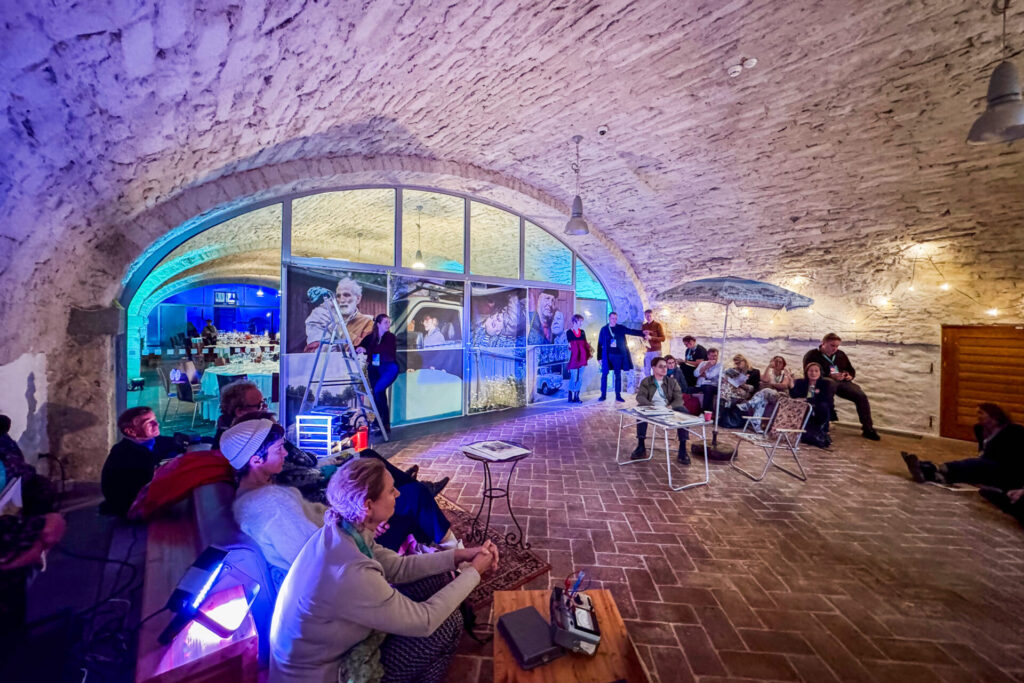
We are coming back from Niš in southern Serbia after the networking session and a few days of training. There are plans to organise a similar event for the Lublin organisations of culture and NGOs. The training was directed at organisations submitting project proposals as a part of the different Creative Europe programmes. Among speakers invited by the Serbian Office, there are representatives from Creative Europe Desk, who work in EU Member States and other countries participating in the programme. We have been invited to participate in the training and deliver a presentation describing our experiences so far and upcoming project plans.

In the audience appeared NGOs from countries like Serbia, Bosnia and Herzegowina, Macedonia and Montenegro. The performances and presentations were accompanied by pitching sessions. The multi-day format of the meeting allows us to reinforce the network of partnerships and the development of transnational collaboration. It also enables deeper understanding of Creative Europe priorities, effective practice, and logical implementation of it. We thank Creative Europe Desk for the opportunity to be a part of this event.

Marta Ryczkowska
Maciej Rukasz


Tłumaczenie: Daria Nowak
Korekta: Aleksandra Górecka

European Flags. RE:UNION

By News

An organisational meeting was held last week on the European Flags. RE:UNION project, which is co-financed by the SYNERGIE grant programme. The project’s objectives include cooperation between cultural institutions and local authorities associated in the Local Tourist Organisation “Metropolia Lublin” and in the Lublin Metropolitan Area, evaluation of cultural potential, fostering an active participation in culture among the local residents and involving the communities which haven’t engaged in cultural activities yet.

The participants of the working group were eager to join the project and accomplish the goals together, strengthening in this way the Working Group for Culture in the Lublin Metropolitan Area, established on December 18th 2024. Thus, the Regional Working Group for the project was formed. This is a continuation of the work in the Cultural Union of the Metropolitan Area – a declaration of a true and sustainable cooperation within the regional network as a part of the ECoC 2029.

The visit provided an amazing opportunity to exchange experiences and establish cooperation with local leaders, external experts, and the municipal’s residents.

Marek Sztark, project coordinator, writes about the meeting:

Will it be possible to create a unique social mosaic, based on the designs of over 100 personal flags prepared by the inhabitants of the Lublin Region and build a large-scale installation that will be situated in the Lublin city centre? In order to begin preparations for the “European Flags. RE:UNION” project, the people of culture from the 22 municipalities associated in the Lublin Metropolitan Area, directors and employees of cultural institutions, librarians and animators met at the Centre for Culture in Lublin. Maria Sztark, a culture animator from Szczecin, currently working in Warsaw, has successfully taken up the challenge of creating such an installation three times. In 2017, an installation of a hundred personal graphic signs printed on fluttering flags was set up in Golczewo, a small town in Western Pomerania. A year later, for the 100th anniversary of regaining Poland’s independence, a similar one was installed on Solidarity Square (Plac Solidarności) in the center of Szczecin, followed by the most spectacular presentation of over a hundred personal identities displayed on Parade Square (Plac Defilad) in Warsaw. The animator encourages residents to engage in conversations about freedom, common areas, relationships and diversity. Under the direction of graphic designers, participants take part in a series of workshops during which original personal flags are designed.

In the Lublin region, the project is implemented within the SYNERGIE grant programme of the National Centre for Culture, which is a part of the national cultural programme of the Polish Presidency of the Council of the European Union, occurring from January 1st to June 30th, 2025. The programme aims to promote European ideas through cultural activities in common spaces, as well as support the implementation of the Polish Presidency of the Council of the EU’s priorities: social solidarity and community, support for young people in entering the labour market, while at the same time activating and involving all age groups in activities, which aligns with one of the main social concept of UNESCO – “Leaving no one behind”.


The partnership was created by the Local Tourist Organisation “Metropolia Lublin”, the Centre for Culture in Lublin, the Lublin Metropolitan Area Association with the municipalities that signed an agreement of the Union of Culture, and foreign partners: the Lithuanian VsI Kauno biennale from Kaunas and the Ukrainian Choir Kanon from Cherkasy.

The final event, during which the installation will be presented, will take place on May 9th, 2025 on Europe Day, in the center of Lublin. The message of the happening will be the idea of RE:UNION, as stated in the LUBLIN ECoC 2029 application – understood as: integration, merge of broken ties, a dialogue between different cultures and generations, between tradition and modernity, past and future, as well as acceptance of multiple value systems and a new, inclusive social contract. The project is implemented within the preparation process for the celebration of the European Capital of Culture Lublin 2029.

During the meeting, it has been agreed that the workshop cycle will take place in several cities of the Metropolitan Area, from March 20th to March 24th, 2025. The project executors also took part in a study visit in Jastków, where they met with residents who actively engage in culture.


Translated by Zofia Świerszcz

Korekta: Aleksandra Górecka

EU-Japan Fest & Lublin 2029 RE:UNION

By News

In recent days, we had the pleasure of hosting Mr. Shuji Kogi, Secretary General of EU-Japan Fest, during his visit to Lublin. The purpose of this visit was to establish collaboration between Lublin and Japan as part of the European Capital of Culture 2029 initiative. Mr. Kogi shared his inspiring vision for artistic exchange between Japan and Lublin, sparking excitement for future cooperation.

For over 30 years, EU-Japan Fest has successfully fostered cultural exchange between Japan and the European Union. The organization focuses on promoting both traditional and contemporary art and culture. With the financial support of Japan’s leading corporations, it enables the presentation of Japanese culture in Europe—particularly in European Capitals of Culture—and European culture in Japan. Joint artistic projects, knowledge sharing, and the integration of traditional and modern art forms lie at the heart of this collaboration. Special emphasis is placed on events that not only strengthen collaboration among artists but also build lasting connections between the artistic communities of Lublin and Japan.

The visit’s agenda included productive meetings and tours of Lublin’s cultural institutions and NGOs. During these sessions, the European Capital of Culture program team had the opportunity to present the ideas and vision from Lublin’s winning application. Joining the discussions was Ana Kočegarova Maj, former Head of International Relations for “Kaunas – European Capital of Culture 2022” and currently Lithuania’s Cultural Attaché in Poland.

The delegation also attended official meetings at City Hall with Mayor Krzysztof Żuk and Deputy Mayor for Culture, Sports, and Participation Beata Stepaniuk-Kuśmierzak. The discussions included members of the Lublin Cultural Centre team, which spearheaded the city’s successful application under the leadership of Director Rafał Koziński, the Mayor’s Representative for ECoC 2029 programming, as well as City Hall staff. We were honored to be supported by Mr. Rafał Dutkiewicz, former mayor of Wrocław, who generously shared his expertise and experience.

As we look to 2029, it’s clear that Lublin will not only host incredible cultural exchanges but will also be a vibrant hub for fostering global connections through RE:UNION. We are thrilled for what lies ahead!


Culture Next Network and SDG Lab

By News

Lublin 2029 at the Culture Next Network conference in Cluj-Napoca, Romania. Midway through our application process, we joined this network, which brings together cities bidding for the title of European Capital of Culture. Today, we are working alongside both titleholders and candidate cities. Within the network, members collectively reflect on the role of culture in Europe, work on shaping the future directions of the European Capital of Culture project, and design frameworks for emerging institutions.

The first day of the conference was dedicated to the Sustainable Development Goals (SDGs), which we discussed during recurring workshops organized by Polyloop. This tech company provides a tool for monitoring data. So far, we have participated in workshops in Leeuwarden and Oulu. During the SDG lab, we had the opportunity to test new features, exploring AI’s alertness and responsiveness in the context of cultural strategies and bid books of cities within the Culture Next Network.

Polyloop facilitates the comparison of documents and the integration of information from various sources. We will certainly utilize this functionality within our monitoring and evaluation team, working as part of the European Capital of Culture Lublin 2029 structure.

Go! Borderless & C the Unseen

By News

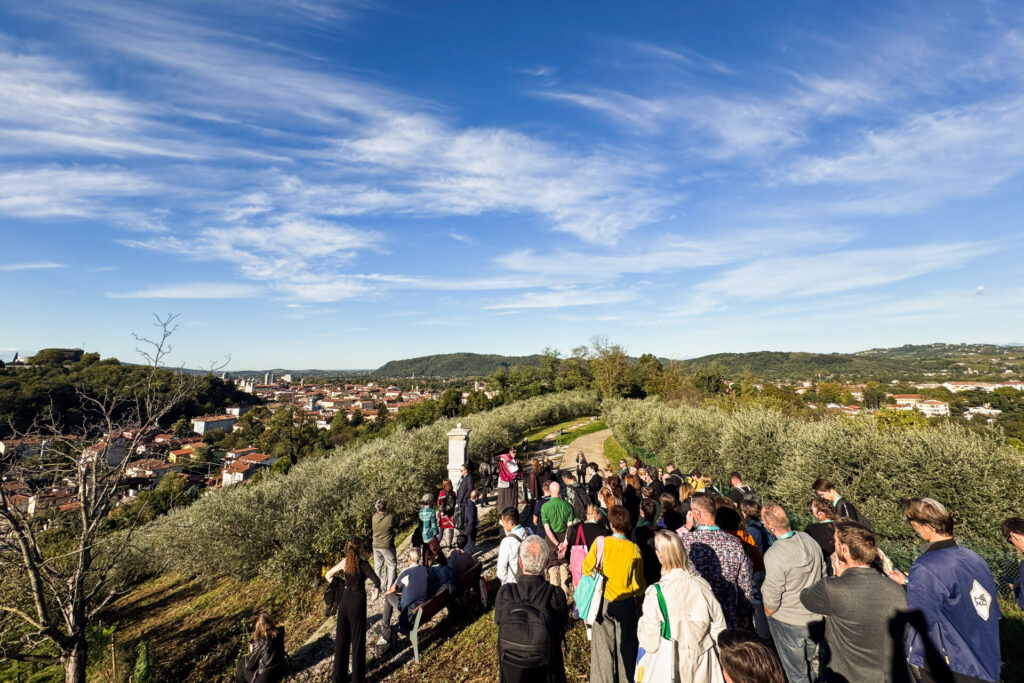
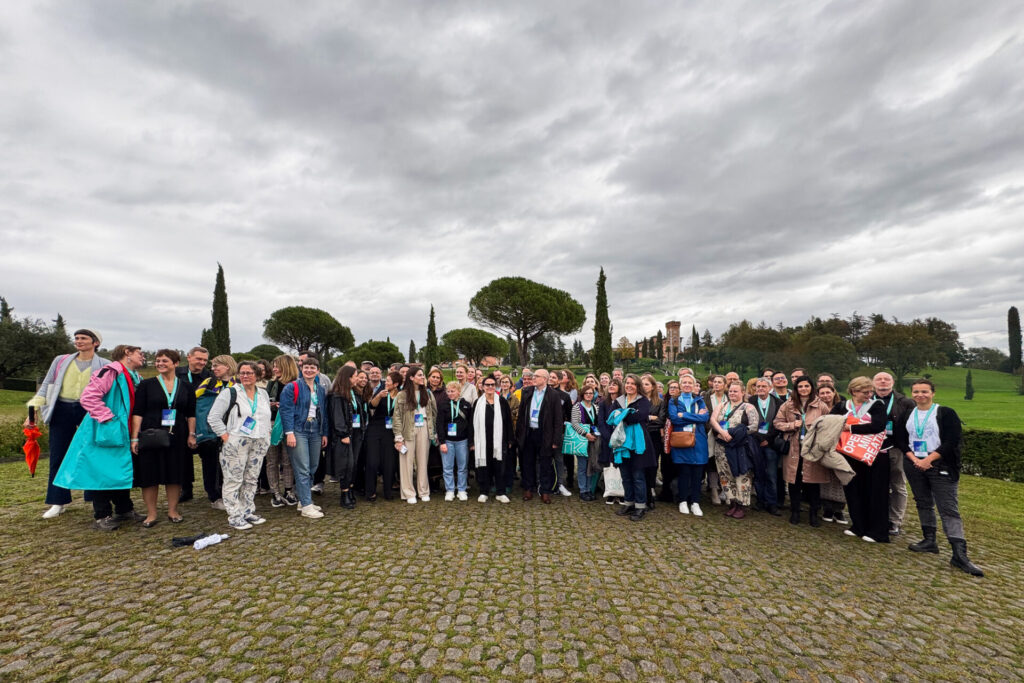
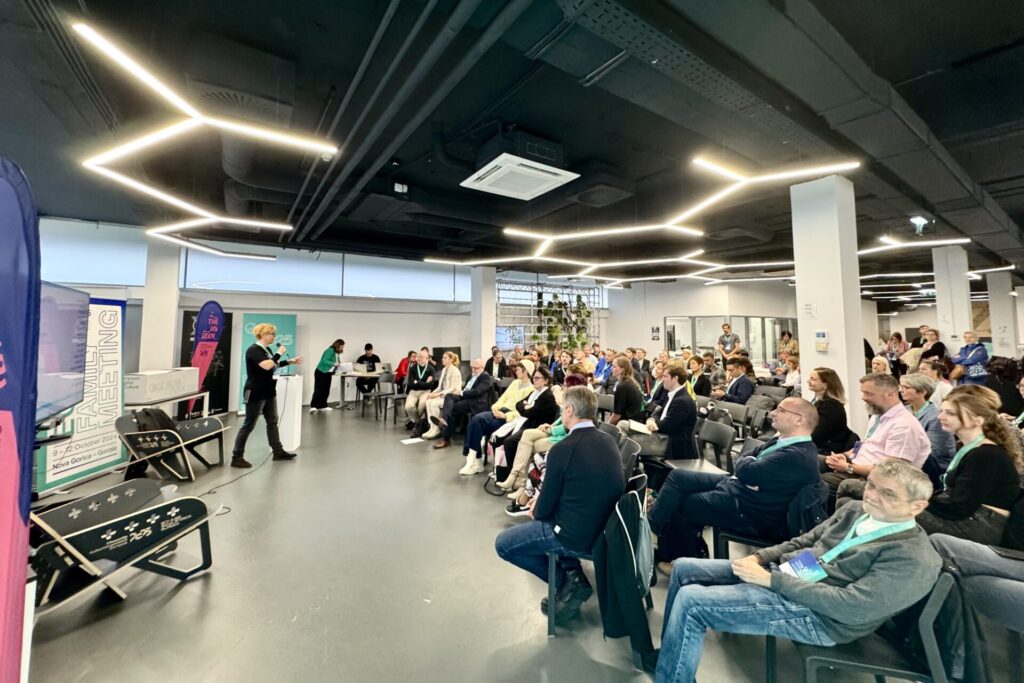
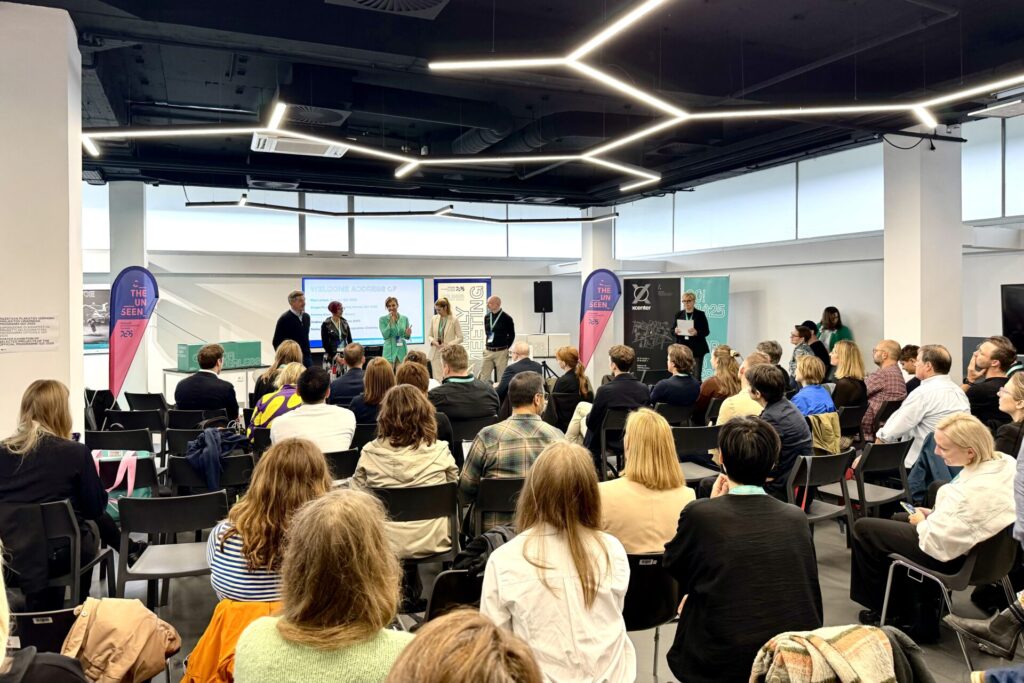
Nova Gorica in Slovenia and Gorizia in Italy, two cities divided by a border, are hosting this year’s ECoC Family meeting, serving as a prelude to the future Capital of Culture—Nova Gorica 2025.

The slogan “Go Borderless!” best captures the essence of this place and its complex identity. Families often speak both Italian and Slovenian, and artists seamlessly move between the two countries. Representatives from 28 cities—hosts of the European Capitals of Culture—are engaging in discussions about borders—physical, historical, cultural, and mental. We are sharing our experiences as a city near the eastern border of the EU.

As we explore the behind-the-scenes of Nova Gorica 2025 and Chemnitz 2025, we instinctively find many elements of shared history among former Eastern Bloc countries. It’s easy to be captivated by the story of Chemnitz’s 3000 garages. We understand what unwanted memories are and the active work required to deal with a difficult past, which makes it easy for us to grasp the importance of the EPIC project. We see how accurately the European Capitals of Culture project responds to the EU’s motto—United in Diversity.

Thank you for the incredibly warm welcome! We look forward to the conference in Chemnitz in June 2025, where research on the future of the European Capitals of Culture project will be summarized.

Marta Ryczkowska, Maciej Rukasz

3,000 garages will open in June in Chemnitz. The curator of the project is Agnieszka Kubicka Dzieduszycka. You can read more about it here ➡️ Eastern State of Mind (Project #3000Garagen, part of the Eastern State of Mind program line).

Lublin 2029 is the ECoC Family member!

By News

On September 25th, we heard the verdict of the Expert Panel—Lublin was designated as the European Capital of Culture for 2029. Now, we are awaiting the official confirmation of the title. However, we are not slowing down— the coming years will be a time of intensive preparations, gathering experiences, and collaborating with current, past, and future ECoCs, also known as the ECoC Family!

Czym jest ECoC Family! Co to znaczy dla nas i dlaczego to tak ważne.

What is the ECoC Family? What does it mean for us, and why is it so important?

The ECoC Family is a network of European Capitals of Culture. For the first time, Lublin can participate in the annual conference, and we have just arrived in Nova Gorica, Slovenia—European Capital of Culture 2025! This is the first transnational capital, uniting Italian Gorizia and Slovenian Nova Gorica.

What are we doing here?

We are here to listen, engage in discussions, and gain the much-needed experience for the years ahead. We are talking about programs, the challenges we will face, finding new partners, reviewing our current plans, and discussing the common threads that unite us. It’s hard to imagine a better source of knowledge than the people who have successfully implemented their applications and cities that have completed their year of celebrations. It is wonderful to see how generously they share their experiences.

Lublin European Capital of Culture 2029

By News

September 25th will be remembered as a milestone in our city’s history, marking the day Lublin was officially named the European Capital of Culture for 2029.

In 2029, Lublin will proudly carry this prestigious title, executing a comprehensive cultural program developed in close collaboration with its residents. Securing the title not only promises a wealth of unique cultural initiatives, projects, and events, but also the development of sectors related to tourism and the promotion of the city on an unprecedented scale. This recognition will bring a series of positive transformations, contributing to growth in areas beyond culture and tourism. Furthermore, the European Capital of Culture title can enhance opportunities for securing European funding, which will support infrastructure development as well as social and cultural initiatives. It also paves the way for new partnerships and the exchange of expertise with other cities across Europe.


“The past two years have been a period of intense work for all of us, with many valuable projects and events realized in the spirit of the RE:UNION idea. We now have several years of preparation ahead, focusing on turning the ideas from our application into concrete actions. I want to thank all the involved communities for their shared effort and contribution to this great success. We have once again proven that Lublin’s culture and the people behind it possess immense potential,” said Krzysztof Żuk, Mayor of Lublin.

The selection process for the European Capital of Culture title was conducted in two stages. Participating cities submitted their initial applications by September 15, 2023, with twelve Polish cities entering the competition: Bielsko-Biała, Bydgoszcz, Jastrzębie-Zdrój, Katowice, Kielce, Kołobrzeg, Lublin, Opole, Płock, Pszczyna, Rzeszów, and Toruń.

Following the first evaluation, a shortlist of cities advancing to the final stage was announced, which included Lublin, Bielsko-Biała, Katowice, and Kołobrzeg. The final decision on the European Capital of Culture for 2029 was based on a thorough assessment of the shortlisted cities’ final applications, which provided comprehensive details of their cultural programs, and in-person presentations to the evaluation panel.

Lublin’s final application, a detailed 100-page document, outlines the city’s cultural, organizational, and financial strategies, as well as its vision for the future. This application was the result of collaboration with local residents, artists, social activists, cultural organizers, and community leaders. An important part of the process was the visit of the European panel of experts to Lublin on September 18, followed by the city’s formal presentation on September 24.

The central theme of our application is RE:Union, which symbolizes an extraordinary gathering, dialogue, mutual care, and a fresh perspective on Lublin.

The concept of the European Capital of Culture has a history spanning over four decades. It was first proposed in the early 1980s, with Athens becoming the inaugural titleholder thanks to the initiative of Melina Mercouri, then the Greek Minister of Culture. In the following years, cities such as Florence, Amsterdam, West Berlin, and Paris held the title. In 1999, the selection process was revised to designate two cities each year, with the exception of the year 2000, when nine cities, including Kraków and Prague, were named as Capitals of Culture.

In 2029, Lublin will share the title with one of two Swedish cities—Kurina or Uppsala. The results of the competition are announced several years in advance to allow ample preparation, which is why the cities selected this year will hold the title in 2029.