Those interested in the competition bid are invited to read the final application.

The Fresh Milk Art Platform (Barbados) and the Centre for Culture in Lublin (Poland), as part of Lublin’s bid for the European Capital of Culture 2029 title, welcomed open call submissions of recent film and video works – screenings, installations, new media, time-based media and expanded cinema – by contemporary artists. Selected works were included in the fifth edition of Transoceanic Visual Exchange (TVE).
TVE 5 is a series of programmes taking place this year between Barbados and Poland, with an accompanying online exhibition. All the submitted works had to be completed in the last five years and had to be made by artists practicing in the Caribbean, Poland, Ukraine, and their diasporas.
Working between the Caribbean, Poland and Ukraine, TVE 5 aims to negotiate the in-between space of our cultural communities outside of traditional geo-political zones of encounter and trade. TVE intends to build relations and open up greater pathways of visibility, discourse and knowledge production between the regional art spaces and their publics, including knowledge about the contemporary world in the context of decoloniality, eurocentrism, and human rights.


The Summer Film Academy has come to an end in Zwierzyniec. The event has been taking place for a quarter of a century. Thanks to cooperation with the Lublin Film Fund, the “Lublin” section appeared in its programme for the first time.
This year’s edition was held under the slogan: “3x Closer” – closer to cinema, closer to creators, closer to viewers. During the 7 festival days, the audience saw films from 38 countries screened in 14 sections and 3 retrospectives.
The programme of the Summer Film Academy also included new films including ones recognized by jurors, critics, and audiences during festivals in Cannes, Berlin, and Venice.
The Festival’s programme had something for all ages. The films selected for the KING section introduced young viewers to the cultures of other countries, and social phenomena. They offered a commentary on important topics of the contemporary world.
During the Summer Film Academy, talking about the films was just as important as watching them. This year’s Festival programme included a record number of lectures and meetings with film makers. An important part of the programme is the retrospectives. This year, they focused on the artistic achievements of Krzysztof Zanussi, Luis García Berlanga, and Aimee Anouk.
As part of the LUBELSKIE section, viewers could watch films set in Lublin. They were created with the financial and organisational support of the Lublin Film Fund of the City of Lublin. The Zwierzyniec audience saw productions presenting Lublin and the Lublin region from an unconventional perspective:
– “This Damn Sunday” – an animated film by Przemysław Kotyński, Lublin in the 1930s.
– “The Maid” – a film directed by Rafał Bryll, a documentary with animation, which is a testimony to real events.
– “Irene’s Vow” – a feature film by Louise Archambault, inspired by true events, the story of teenage Irena Gut, who risked her life during World War II to hide and save a dozen people of Jewish origin from the Holocaust. The main roles are played by international cinema stars: Sophie Nélisse and Dougray Scott. The cast of the Polish-Canadian co-production also includes Andrzej Seweryn, Filip Kosior, Rafał Mohr, and Eliza Rycembel.
In addition, this section will also feature a screening of the film “Motór” by Wiesław Paluch, set in Biłgoraj.
The cooperation between the City of Lublin and the Summer Film Academy in Zwierzyniec was initiated as part of the idea implemented by Lublin, as part of the bid for the European Capital of Culture 2029. This is one of the activities that aims to create a regional network of cities, communes, and counties. The main goal is to develop and promote the culture of the Lublin region.


In mid-August, Lublin celebrates the anniversary of the granting of city rights by Władysław Łokietek. The participation in the competition for the European Capital of Culture gave this year’s celebrations a special character. It encourages reflection on the city’s history, looking into the future, and taking on contemporary challenges.
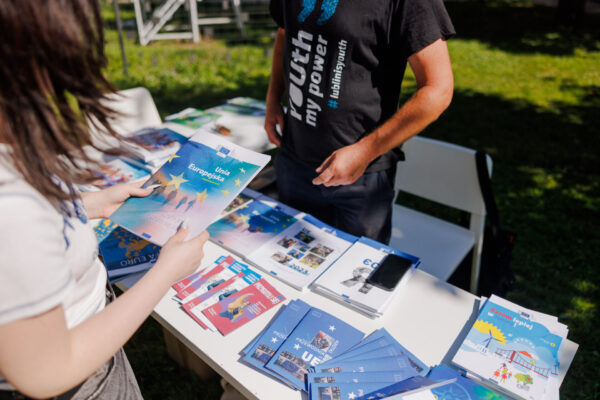
The celebration of the 707th birthday began on August 12, on International Youth Day. The Creative Relaxation and Youth Information Zone “Chill & Charge” was created in Litewski Square. Young residents could relax on deckchairs and hammocks. It was also an opportunity to meet experts from the Youth Information and Development Centre, Eurodesk Lublin, Europe Direct Lublin, and representatives of the Youth Space. The event called #ESMactive was an outcome of the European Youth Capital 2023, and a part of the implementation of Lublin’s youth policy.
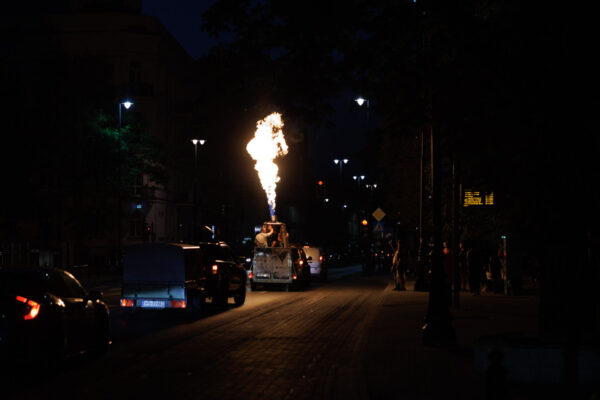
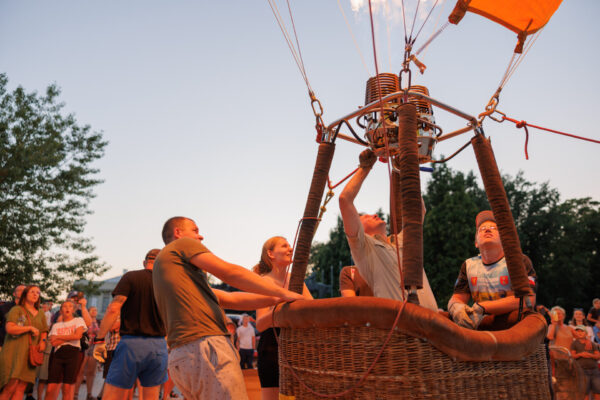
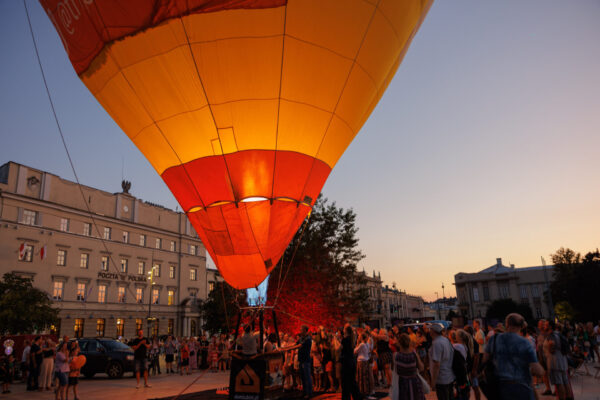
The 2nd edition of the Hot Air Balloon Fiesta provided a unique setting for the city’s birthday celebrations. The organizers offered animations and games, a night ride with burners, and flights over the city.
Those who set out on thematic walks could learn about the history of Lublin and the people related to the city. The first walk concentrated on the figure and works of Julia Hartwig. Participants visited places associated with the poet and the Hartwig family. The Guides of Inspiration hosted planned walks under the slogans: “Let’s brag about Lublin”, “Lublin, all the best!” and “Before Lublin was born…”.
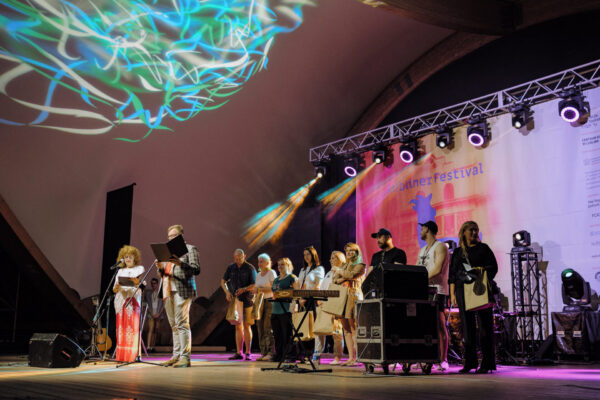
Over the centuries Lublin drew from diverse traditions to build its identity. This was reflected during two festivals – the Lubliner Festival, presenting Jewish culture, and Re:tradition – Jagiellonian Fair, devoted to music and traditional crafts.
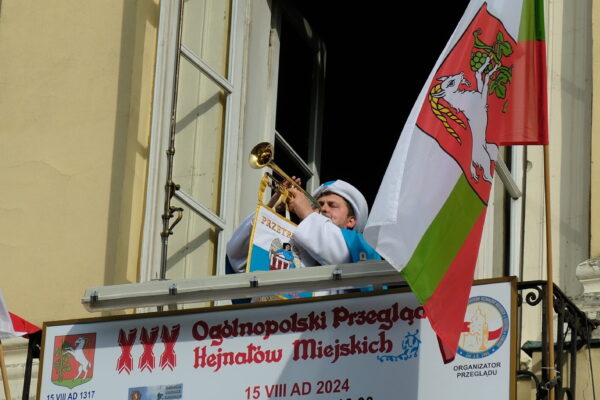
The program also included the National Competition of Budge Calls. This year the 30th- anniversary edition of this unique event popularizing city bugle calls, which are an important element of various cities’ identity. In the case of Lublin, the tradition dates back to the 16th century.





In mid-August, Lublin celebrates the anniversary of the granting of city rights by Władysław Łokietek. The participation in the competition for the European Capital of Culture gave this year’s celebrations a special character. It encourages reflection on the city’s history, looking into the future, and taking on contemporary challenges.
The celebration of the 707th birthday began on August 12, on International Youth Day. The Creative Relaxation and Youth Information Zone “Chill & Charge” was created in Litewski Square. Young residents could relax on deckchairs and hammocks. It was also an opportunity to meet experts from the Youth Information and Development Centre, Eurodesk Lublin, Europe Direct Lublin, and representatives of the Youth Space. The event called #ESMactive was an outcome of the European Youth Capital 2023, and a part of the implementation of Lublin’s youth policy.
The 2nd edition of the Hot Air Balloon Fiesta provided a unique setting for the city’s birthday celebrations. The organizers offered animations and games, a night ride with burners, and flights over the city.
Those who set out on thematic walks could learn about the history of Lublin and the people related to the city. The first walk concentrated on the figure and works of Julia Hartwig. Participants visited places associated with the poet and the Hartwig family. The Guides of Inspiration hosted planned walks under the slogans: “Let’s brag about Lublin”, “Lublin, all the best!” and “Before Lublin was born…”.
Over the centuries Lublin drew from diverse traditions to build its identity. This was reflected during two festivals – the Lubliner Festival, presenting Jewish culture, and Re:tradition – Jagiellonian Fair, devoted to music and traditional crafts.
The program also included the National Competition of Budge Calls. This year the 30th- anniversary edition of this unique event popularizing city bugle calls, which are an important element of various cities’ identity. In the case of Lublin, the tradition dates back to the 16th century.
The Summer Film Academy has come to an end in Zwierzyniec. The event has been taking place for a quarter of a century. Thanks to cooperation with the Lublin Film Fund, the “Lublin” section appeared in its programme for the first time.
This year’s edition was held under the slogan: “3x Closer” – closer to cinema, closer to creators, closer to viewers. During the 7 festival days, the audience saw films from 38 countries screened in 14 sections and 3 retrospectives.
The programme of the Summer Film Academy also included new films including ones recognized by jurors, critics, and audiences during festivals in Cannes, Berlin, and Venice.
The Festival’s programme had something for all ages. The films selected for the KING section introduced young viewers to the cultures of other countries, and social phenomena. They offered a commentary on important topics of the contemporary world.
During the Summer Film Academy, talking about the films was just as important as watching them. This year’s Festival programme included a record number of lectures and meetings with film makers. An important part of the programme is the retrospectives. This year, they focused on the artistic achievements of Krzysztof Zanussi, Luis García Berlanga, and Aimee Anouk.
As part of the LUBELSKIE section, viewers could watch films set in Lublin. They were created with the financial and organisational support of the Lublin Film Fund of the City of Lublin. The Zwierzyniec audience saw productions presenting Lublin and the Lublin region from an unconventional perspective:
– “This Damn Sunday” – an animated film by Przemysław Kotyński, Lublin in the 1930s.
– “The Maid” – a film directed by Rafał Bryll, a documentary with animation, which is a testimony to real events.
– “Irene’s Vow” – a feature film by Louise Archambault, inspired by true events, the story of teenage Irena Gut, who risked her life during World War II to hide and save a dozen people of Jewish origin from the Holocaust. The main roles are played by international cinema stars: Sophie Nélisse and Dougray Scott. The cast of the Polish-Canadian co-production also includes Andrzej Seweryn, Filip Kosior, Rafał Mohr, and Eliza Rycembel.
In addition, this section will also feature a screening of the film “Motór” by Wiesław Paluch, set in Biłgoraj.
The cooperation between the City of Lublin and the Summer Film Academy in Zwierzyniec was initiated as part of the idea implemented by Lublin, as part of the bid for the European Capital of Culture 2029. This is one of the activities that aims to create a regional network of cities, communes, and counties. The main goal is to develop and promote the culture of the Lublin region.
The meetings in working groups focused on the main challenges in cooperation between the City of Lublin and non-governmental organizations. The conversations picked up on the previously discussed threads.
The creation of a Center for Supporting Non-Governmental Organizations was discussed on July 17th at the City Hall. Representatives of numerous NGOs attended the meeting. The main topic was to discuss the needs and expectations regarding the creation of the Center. The participants talked about the impact that the lack of such a centre may have, both from the perspective of the organization, and the city itself. The individual needs of the organization were grouped and assigned to 6 categories. This evaluation will facilitate further work on the development of the Center. The groups worked on solutions that could support the implementation of these needs.
The availability criteria in public open tenders was discussed again on July 24. Participants focused on conclusions from previous meetings and opinions on the evaluation principles used in other cities such as Wrocław, Gdańsk, and Warsaw. The participants agreed that the competition forms should include a separate criterion regarding accessibility. This criterion should be an important factor in the evaluation of the offer. However, its absence should not result in the rejection of such an application.
The meeting, which took place on August 1, was devoted to improving the cooperation of the City Hall with the third sector. Topics discussed included transparency of offers, assessment of the organization’s experience in working with the City Hall, and sharing the full evaluation of offers. Much time was devoted to the calendar of tenders, and multi-year competitions. The solutions in this field may help organizations solve the problem of effective work schedule planning and ensuring financing for activities. Participants also considered the advantages and NGOs.
Consultations of the Cooperation Program of the Lublin Commune with NGOs and entities referred to in Art. 3 Section 3 of the Act on Public Benefit Activities and Volunteering for 2025 is open until September 8th. Comments on the document can be submitted via the FORM. Details are available on the website lublin.eu.


The Lublin ECoC application was submitted to the Ministry of Culture and National Heritage yesterday. We are proud of the bid book that we created together. This collective commitment of the Lublin cultural community, non-governmental organizations, and residents of Lublin will surely pay off.
The application process has become an impulse to support social change in the city through culture. Representatives of Lublin’s cultural institutions formed a consortium – the Union of Lublin Cultural Operators. Together, they developed the most important program assumptions for the final application. Regardless of the result of the competition, the consortium will continue its work, taking into account the assumptions included in the application. Thanks to the Re:Union idea, each scenario is a win-win situation.
On Europe Day (May 9), the Cultural Union of the Metropolitan Area was concluded. We want to share the idea of the European Capital of Culture with cities, communes and counties of the Lublin metropolitan area. It is a signal that we regard the process as a starting point for reflection on a common concept of partnership between cities and communes in eastern Poland.
The business community also supports the implementation of the European Capital of Culture Lublin 2029. The concluded Business Union creates new standards of mutual support for culture and business. The rectors of all 9 universities in Lublin joined the agreement and submitted a declaration in favour of cooperation at ECoC 2029. Academia is one of the pillars of Lublin’s development. Cooperation with the academic circles becomes crucial in light of the EcoC competition.
The organizing committee would like to thank everyone involved in the process so far for their joint work and perseverance.


Today, the Ministry of Culture and National Heritage received Lublin’s final application for the title of European Capital of Culture 2029. The document is 100 pages long and contains a specific, closed, comprehensive book on our program, organizational, financial plans and ideas about the city.
The motto of the application is RE:UNION understood as an extraordinary meeting, dialogue, care for each other, and a new look at Lublin. Winning the ECoC competition provides a great opportunity for European-wide promotion. It may become a starting point for changes that the entire city community will be able to experience long afterward. It’s not only about great festivals, prestigious performances, and exhibitions. It is also a chance to face the cultural and civilizational problems of cities, helping to increase the well-being of residents. In Lublin, we have long believed that culture can integrate and shape imagination, opening the mind to changes and good solutions. Still to come in September are visits from the European experts, and a presentation to the panel assessing the final application. The results of the competition will be announced on September 25.
Keep your fingers crossed for Lublin!


Employees of the Centre for Culture in Lublin talked to one of the co-authors of the Lublin ECC 2016 application – Marcin Skrzypek from the “Grodzka Gate – NN Theatre” Center. The interview for the KULTURA ENTER magazine concerned Lublin’s participation in the European Capital of Culture 2029 competition.
Marcin Skrzypek: Do you often find yourselves interviewed on this subject?
Rafał “Koza” Koziński (Director of the Centre for Culture): This is our second interview about ECoC 2029. Previously, we only talked to “Jawny Lublin” after Lublin was shortlisted in the competition.
Why so?
Paweł Passini: In this edition of the ECoC, the situation is different, and we, as a team behind the application, function differently. For example, we can’t approach the experts who evaluate the application. We must avoid even the accidental encounters with them. Advertising, and public relations – this is the city’s task, not ours.
Things have changed a bit since last time.
R.K.: And that’s where we should start. Many Polish cities consciously gave up on the ECoC 2029 competion because they did not want to re-enter the process. Besides, there was a pandemic, a crisis, then a war. People thought it wasn’t a good time to start racing to see who would throw a bigger party. Initially, I also had this approach, but I read that the rules and criteria of this competition had changed. It’s no longer about a “festival of festivals.” New regulations and rules were established. It turned out that now it’s about a process, not a mega event. This is a trial of error. The ECoC aims to solve urban problems while giving it a European tone.
Is that why the abbreviation ECoC 2029 appeared on the promotional banners – from the English name of the European Capital of Culture? An attempt to cut yourself off from the past?
R.K.: No, this abbreviation is used parallel to ECoC 2029 in some advertisements due to tourists and foreign students.
P.P.: Moreover, this is the original name of this competition, which we use in order to recognize its European dimension.
R.K.: We deliberately changed the logo to make it clear that it’s about Europe. Now there are three in one: the city logo, the ECoC and the European Union flag. Because, contrary to appearances, in Lublin we still need to become European.
It was an issue in previous years. Cities received the ECoC title, but then the European Commission and Parliament no longer had influence on how the ECoC events were presented to residents. Guidelines regarding the ECoC require the holders of the EcoC title to indicate it is a European Union project.
The situation from the beginning of the century is repeating. At that time everything had to have the prefix “euro”. I thought we were already Europeanized enough…
P.P: We still live in an alternative reality. For the last eight years, foreign cooperation in our country has been censored. For example, in ministerial proposals, the international cooperation factor is still underestimated. Our region is a black spot in this respect. We already have good contacts in the North and the South, but only a few partners in the West. The countries of the old EU have different cultural policies and are rated well in terms of international cooperation. They prepare ECoC applications using the same “engines” that they have been using to submit applications to their ministries for years.
Miłosz Zieliński: The countries of the new EU have always had a problem with this aspect. That’s why for at least five editions of the ECoC they have been told to Europeanize and network.
The networking seems to be missing in Lublin, according to some critics.
R.K.: We feel that when creating an image of the city for the application, for it to be truly coherent and representative, we must communicate with a specific group of people, and not talk to everyone through the media. We invited all residents to submit ideas and share their dreams. There have been over 3,000 submissions. The cultural community had two calls for proposals and 500 projects were submitted.
The interview was published in the 110th issue of Kultura Enter 2024/03. The full conversation is available here.