Category

News

Spring Forward Aerowaves

By News

Aerowaves is a platform created to give some of the most promising choreographers from across Europe the opportunity to present their work to professionals, curators, and directors of the most important and renowned institutions and festivals both within and beyond Europe.

Held from April 23rd to 27th, the 14th edition of the Spring Forward Aerowaves festival, organized by a.ArtistiAssociati, became part of the official programme of Nova Gorica – Gorizia, the European Capital of Culture 2025.

The Aerowaves 2025 programme featured 21 performances from 17 countries. The shows are selected each year by a group of curators, in which Lublin Dance Theatre from the Centre for Culture in Lublin is always represented. This year’s edition brought together around 300 participants from the international dance community. In addition to choreographers, dancers, and curators from Europe, the event welcomed representatives from Japan, Taiwan, Hong Kong, and Canada, among others. Performances took place on five stages across Gorizia and Nova Gorica, with some open to the local public.

Lublin Dance Theatre was invited to take part in two international projects in collaboration with Tanec Praha and Onassis from Greece. We have also begun discussions about cooperation within VAP, a network of over 20 festivals from across Europe.

With pride, we confirmed the plans to host the Spring Forward festival in Lublin in 2029 — an event included in the programme of the European Capital of Culture Lublin 2029 RE:UNION.

pht. Anna Kalita

Anna Kalita, Lublin Dance Theatre, Centre for Culture in Lublin

Palestine: here and now

By News

On May 10-11 we will launch a new project called “Palestine: Here and Now”, as part of the Voices of the World series, which focuses on the cultures of Southwest Asia and North Africa.

Our objective is to deepen our understanding of the complexity and diversity of the region. In doing so, we are expanding our existing efforts in the area of intercultural dialogue, which are carried out as part of the “Voices of the World” series and already include Jewish, Belarusian, Ukrainian and Caribbean cultures.

The first part of the series “Here and Now” is dedicated to Palestine, which, due to its current situation, requires particular interest and support. This edition will present films addressing a variety of social, political and cultural issues. The programme will also include meetings with filmmakers and translators, providing an opportunity for direct contact with their works and the people involved. There will also be talks and panel discussions. Special attention will be paid to Palestinian culture in the broader context of Arab culture, including analysis of themes such as feminism and the role of women in Arab society, as well as the current political situation.

“Palestine Here and Now” it is a part of the programme Lublin  Beyond the Seas

PROGRAM:
May 10 (Saturday)
12:00 – Decolonization of the Imagination: Arab culture between myth and reality – opening lecture of the festival / conducted by Paweł Hadrian / Centre for Culture Cinema / free entrance.
13:45 – Where the Olive Trees Weep – film / Centre for Culture Cinema / free admission.
15:30 – Intermission.
16:30 – Author’s meeting: Hanna Jankowska / conducted by Paweł Hadrian / Centre for Culture Cinema / free entrance.
16:30 – Little Big Man: about human rights for children – workshops for children / conducted by Ira Filas / Chamber Hall, Basements of the Centre for Culture (Sala Kameralna Piwnice CK).
17:45 – Author’s meeting with Bartosz Wójcik on the book “Rifka” by Mohammed el-Kurd / conducted by Sara Akram / Centre for Culture Cinema / free entrance.
19:00 – We don’t want another land – film / Centre for Culture Cinema / PLN 15.

May 11 (Sunday)
13:00 – Pro-Palestinian activism – panel discussion / Centre for Culture Cinema / free entrance.
14:45 – Jaffa Orange + Artists from Gaza – short film screening / Centre for Culture Cinema / free entrance.
16:00 – Author’s meeting: Elias Jahshan / conducted by Anastas Krusinskaya / Centre for Culture Cinema / free entrance.
17:15 – Farha – film / Centre for Culture Cinema / free entrance.
17:15 – Palestinian Women’s Activism: On the Ground, Online, and Beyond – hybrid meeting with Sophie Richter-Devroe and Karolina Rak / conducted by Mouna El Khala / Chamber Hall, Basements of the Centre for Culture (Sala Kameralna Piwnice CK) / free entrance.
18:30 – Letters for Palestinian Childhoods – hybrid meeting with Rachel Rosen / conducted by Anna Witeska-Młynarczyk.
19:00 – Palestine That Wasn’t – film / Centre for Culture Cinema / free entrance.
19:45 – Hybrid meeting with Azza El Hassan / conducted by Mouna El Khala.

In addition:
Multimedia exhibition: “Letters for Palestinian Childhoods” / Foyer of Centre for Culture Cinema / free entrance.
Translated by Aleksandra Górecka
Proofread by: Daria Nowak

The Finale of the “European Flags” Project

By News

Come celebrate Europe Day with us on May 9th, 2025, at Litewski Square – let’s enjoy this special day together!
A large-scale public installation called “European Flags. RE:UNION”, along with a performance of the Ukrainian Choir “Kanon” from Cherkasy will inspire reflection on our European and local identity, freedom, common areas, relationships, and diversity.
The event “European Flags. RE:UNION” is held within the National Centre for Culture SYNERGIE grant programme, under the auspices the Polish Presidency of the Council of the European Union. The project stems from the cooperation of the following three organisations from Lublin: the Lublin Metropolis Tourist Organisation, the Centre for Culture in Lublin, and the Lublin Metropolitan Area Association; including also external expertise, and international partners.
The aforementioned event will mark the finale of initiatives aimed at forging new relationships and fostering those already established within the local community. The installation will be of a social nature – it will inspire us to build a community through artistic activities, and encourage participation in cultural life. Participants will take part in a series of workshops, conducted using community art methods. The inhabitants of the Lublin Metropolitan Area will create 100 customised flags which will be displayed as an installation, along with the authors’ portraits and their story.

The message behind the happening will be the idea of RE:UNION, as stated in the LUBLIN ECoC 2029 application, which is construed as integration, merge of broken ties, a dialogue between different cultures and generations, tradition and modernity, past and future, as well as the acceptance of a multifaceted value system, and a new, inclusive social contract.

Completing the project will serve as the inauguration of joint initiatives among the communities of the municipalities that declared their contribution to the Cultural Union of the Metropolitan Area within the preparation process for the celebration of the European Capital of Culture Lublin 2029.
Funded by the Ministry of Culture and National Heritage within the framework of the SYNERGIE grant programme.


Translated by Zofia Świerszcz
Proofread by Aleksandra Górecka

Young artists – challanges and reality

By News

Lublin 2029 at the “Young artists – challenges and reality” conference

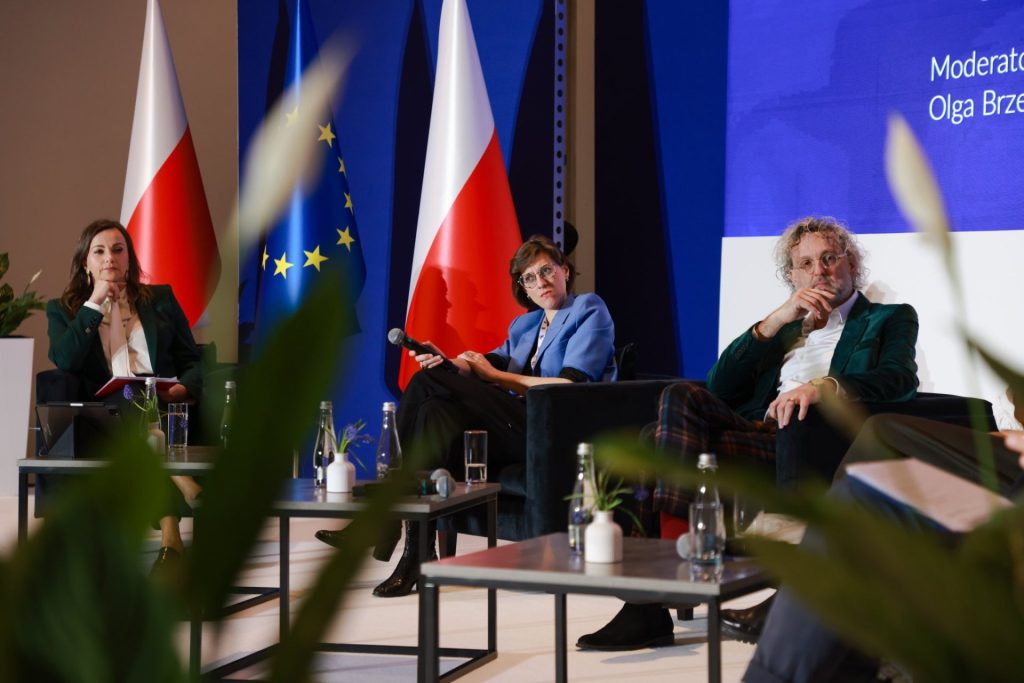
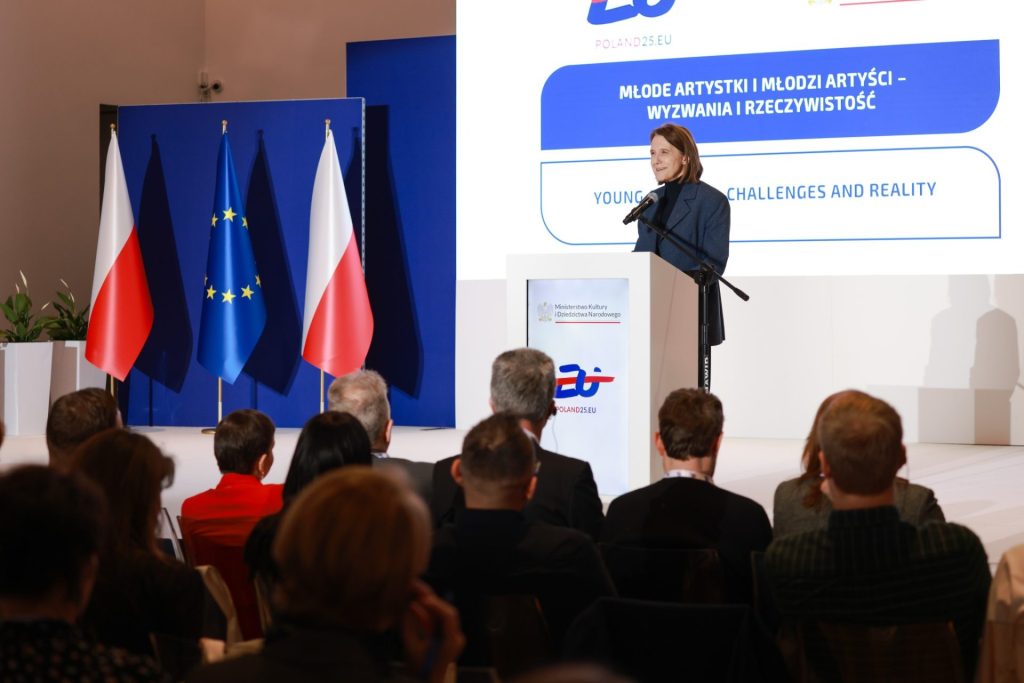
Can culture be an answer to the challenges that security-focused Europe faces? From April 9 to 10, 2025, the National Gallery of Art in Zachęta hosted an international conference on the situation of young artists in the labour market. The event, organized as part of the Polish presidency of the Council of the EU, convened creative and managerial individuals, and representatives of cultural institutions from across Europe. Discussed topics included artists’ mobility, access to education, planning a career path, equality and sustainability in the cultural sector, and the future of creative professions in the age of AI.

Photo by Danuta Matloch / Ministry of Culture and National Heritage

Agnieszka Polska, whose works have been exhibited in prestigious galleries, such as MoMA and Tate Modern gave the inaugural speech. The visual artist and lecturer at foreign art universities talked about establishing an international career. In her opening speech, Agnieszka Polska posed the question of whether this Period of Unrest is the right time to redefine the role of the artist in the modern world. She stressed that the imaginative resources at the disposal of the creative community do make it possible to fully grasp growing social and political problems from non-obvious, often unpredictable perspectives.


The second speech was delivered by Philippe Kern, advisor to the European Commission on cultural policy, who presented European strategies for supporting the artists. The presentation was followed by a series of six panel discussions, during which experts and artists debated key aspects of functioning in artistic and market reality. They debated, among other things, the need for mentoring programs, artist residencies and cultural incubators, as well as the need to network creative communities. They also discussed the need for equal opportunities in access to art education, regardless of social background or place of residence, and the role of cultural education, starting even at the school stage, as a key foundation for future artistic careers.

Photo by Danuta Matloch / Ministry of Culture and National Heritage

The Lublin 2029 team’s participation in the event was a perfect opportunity to develop a network of cooperation with European partners, and to reflect more deeply on the role young artists play in the future of culture. The conference truly aligned with the values and goals of the European Capital of Culture programme, which focuses on agency, diversity, and long-term support for artists of the new generation.

Translated by Aleksandra Górecka

Proofread by Zofia Świerszcz

Performance “2129” – A Jubilee Journey into the Future of Student Culture

By News

We have witnessed six extraordinary performances of “2129”, a jubilee event created to celebrate the 60th anniversary of the Academic Center of Culture and Media UMCS Chatka Żaka. It is also part of the European Student Capital of Culture program – a special, premiere performance Lublin 2129, a theatrical story about Lublin as ESK 100 years from now, told through the eyes of students (spring 2025 performances).

Since its premiere, the performance has been seen by over 1,500 viewers, and the excitement remains – because “2129” is more than just theater. It is a timeless journey through the history, present, and future of student culture, told through movement, visuals, sound, and emotions.

Michał Puła

In the year 2129, time capsules drift through space, carrying the legacy of a world that no longer exists. Inside them are memories, art, emotions, music, and rebellion – everything that has developed over decades within the walls of Chatka Żaka. Will there be anyone able to understand it? Will human sensitivity survive in a world ruled by algorithms?

“2129” is:

an artistic time capsule inspired by the history and spirit of Chatka Żaka,

a performance combining theater, live music, projections, archival voices, and choreography,

a story about the importance of nurturing culture and creative expression,

a manifesto showing that art – even in the distant future – can be a lifeline for humanity.

Michał Puła

The performance “2129” was realized as part of the project “City of Culture – 60 Years of Student Culture – Student Theater 2.0”, in collaboration with the ACKiM UMCS Chatka Żaka Foundation, with the support of the City of Lublin.

40 years of European Capitals of Culture

By News

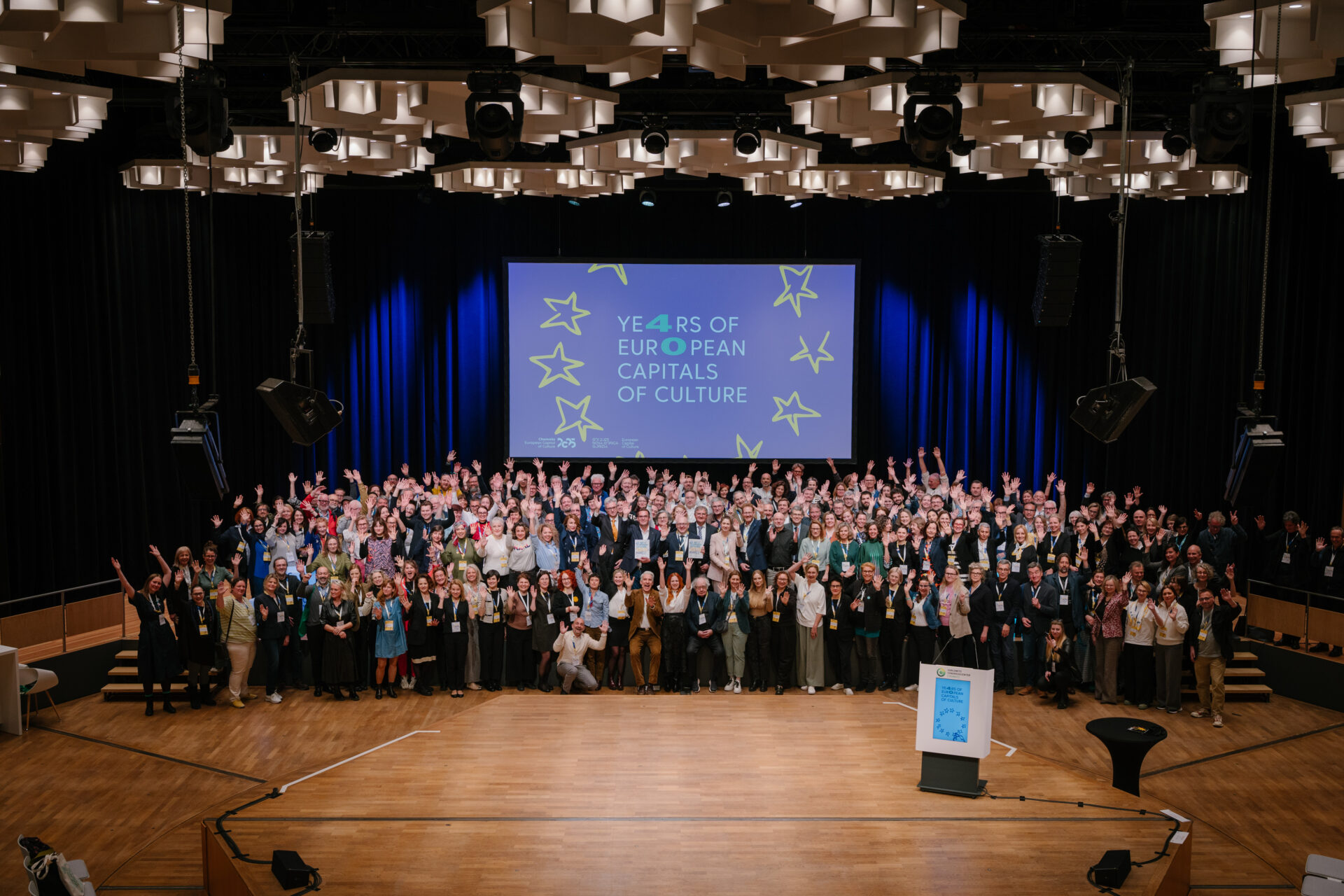
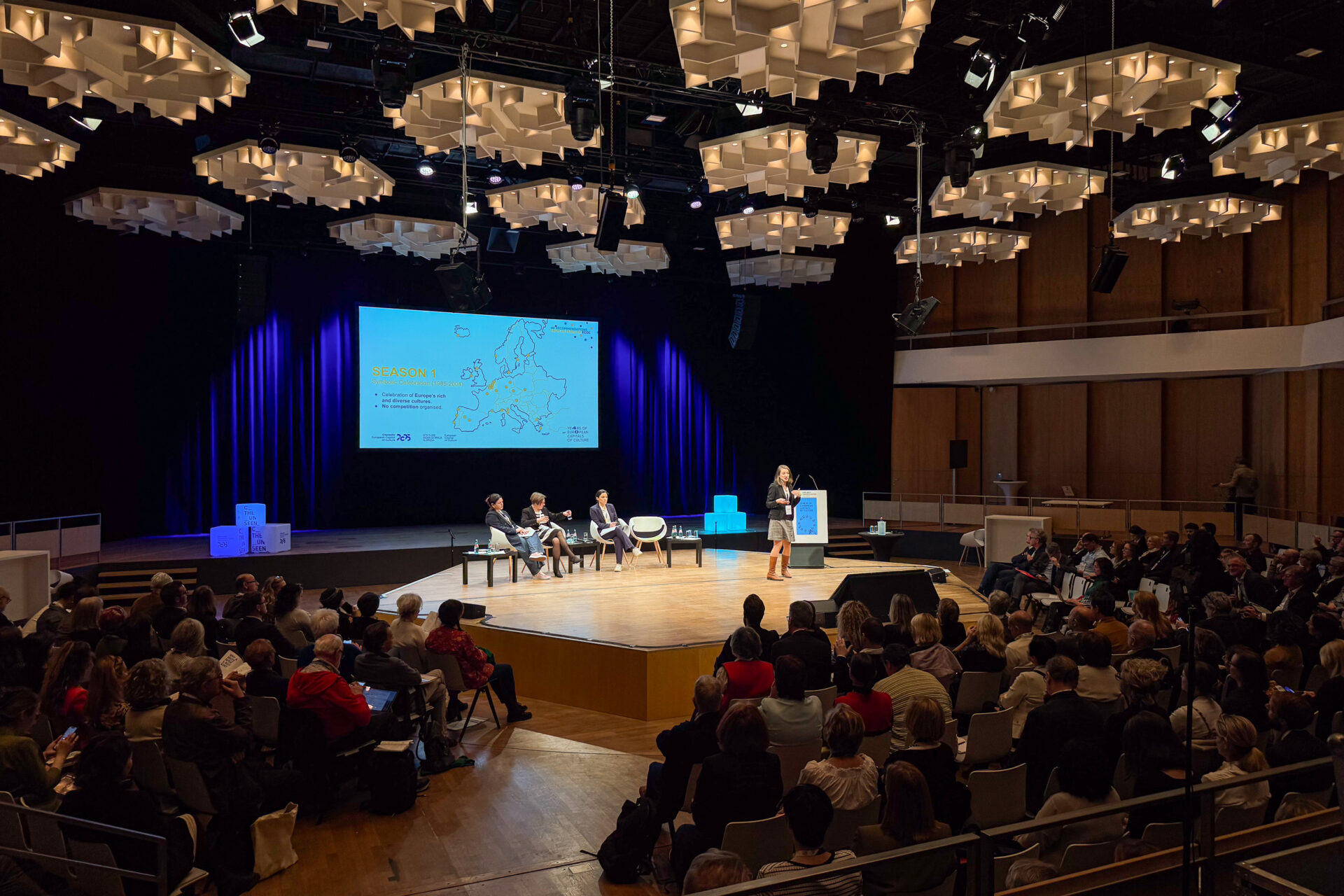
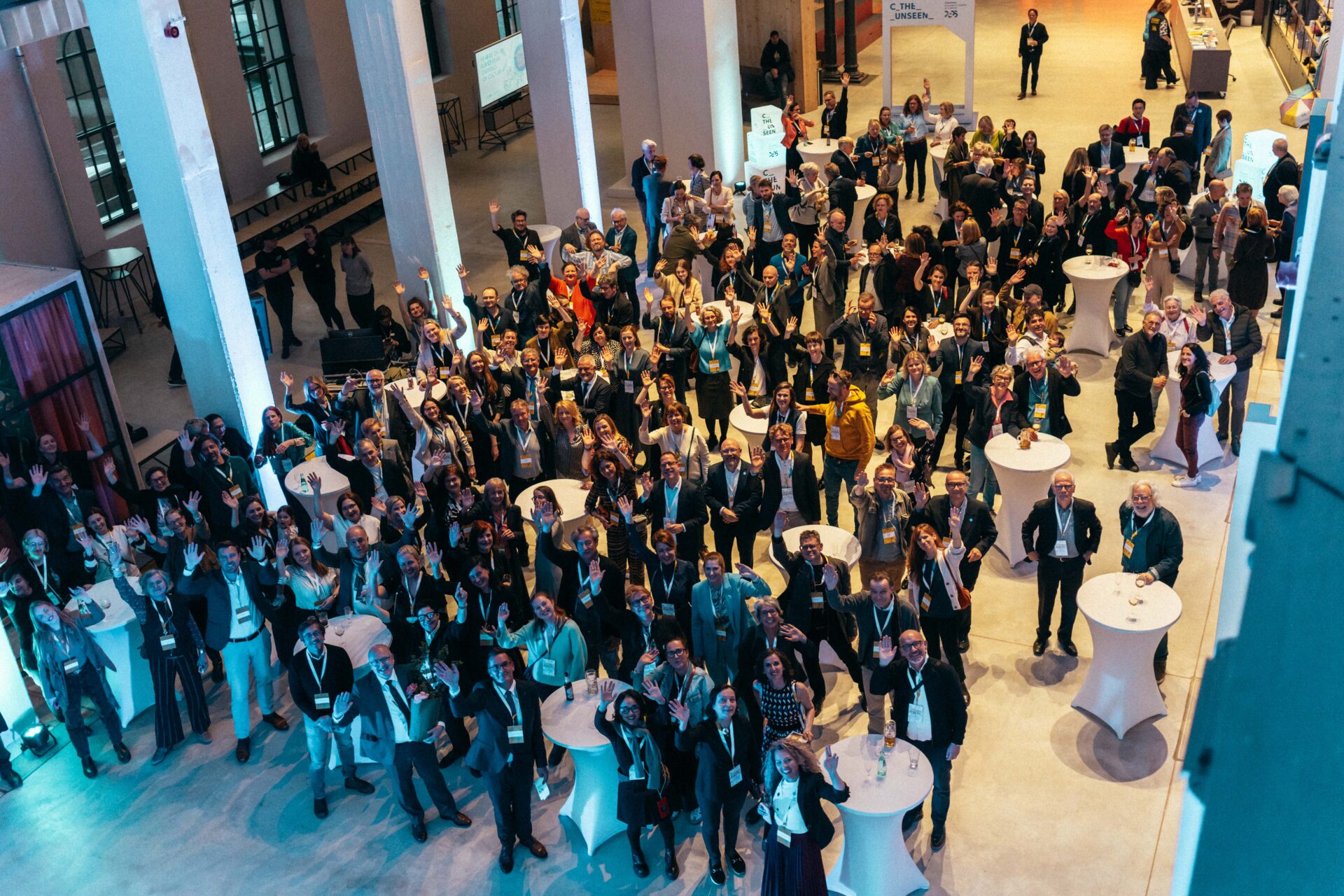
Could Melina Mercouri, when she initiated the European Capital of Culture project in 1985, have foreseen how far it would come? A united Europe, 56 capitals, 250 conference participants from all EU countries, representatives of the European Parliament, the European Committee of the Regions, the European Commission, the diplomatic corps, as well as national and local governments.

Together, they celebrate the 40th anniversary of this remarkable initiative that has boldly transformed the European Community. They work on shaping the future of culture in Europe and share what is most valuable – experience built on diversity. Together, we reflect on 40 years of our history, discuss successes, the need for change, and a shifting reality. We are working on the future of the European Capital of Culture and Lublin 2029.

fot. Johannes Richter

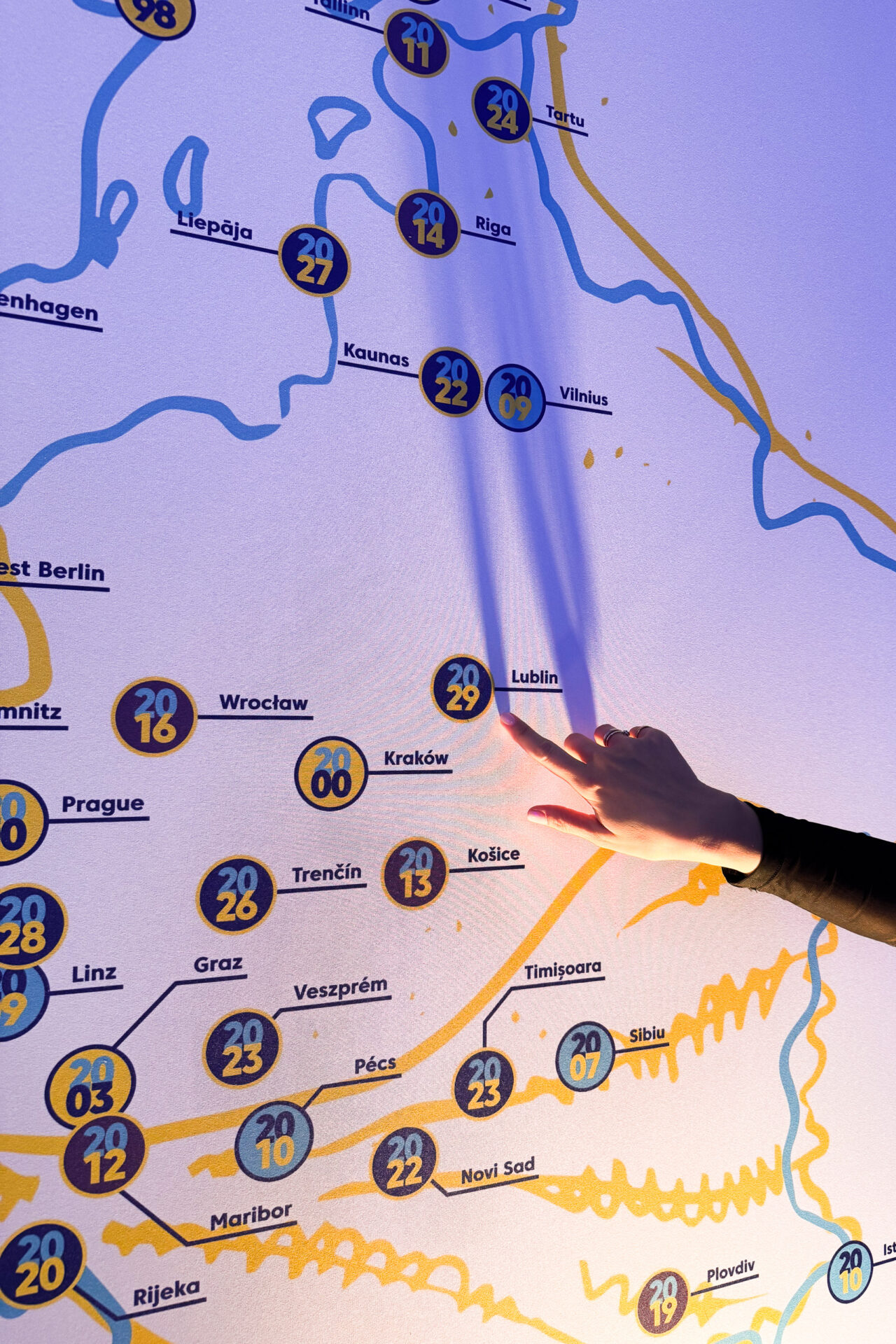
In about two years, the shape of the new regulations will be determined. Already now, those responsible for implementing the ECoC project have completed another stage of work on a set of recommendations, which will soon be put to a vote. In Chemnitz, the “White Paper” was presented – a document titled “40 Recommendations from 40 Years of ECoC: Insights for the Capitals from 2034 onwards” It summarizes nearly two years of work by an international research group established under Chemnitz’s “Makers of Democracy” program line. It contains insights of great value to us, but above all, it is intended to serve as a set of guidelines for future ECoCs and as a foundation for new legislative solutions.

fot. Maciej Rukasz

A full day of panels at the Carlowitz Congresscenter was devoted to the evolution of the ECoC project and its challenges. After the presentation of the White Book, participants broke into working groups to discuss organizational matters, cultural policy, capacity building, and future directions. The evening concluded with a formal gala, and on Saturday, participants had the opportunity to visit key ECoC-related sites in Chemnitz, such as the Garagen-Campus and Stadt am Fluss. Lublin was represented by the Mayor’s Plenipotentiary for the European Capital of Culture and the ECoC Curatorial Council.

fot. Marta Ryczkowska

The conference also provided an opportunity to review the program’s achievements so far and set new goals, emphasizing the role of culture in the integration and development of European cities. For Lublin 2029, this is of immense value – especially at this stage of our preparations for the title year.

fot. Ernesto Uhlmann

Lublino 2029 – European Capital of Culture – ECoC in Rome

By News

The title of European Capital of Culture 2029 is yet another reason to visit Lublin. Our title year is still four years away, but the city is already an attractive destination for many Europeans. In 2024, we welcomed 2.3 million tourists, many of whom were drawn by our rich cultural offerings. We are confident that this year will be even better.

At the invitation of the Lublin Metropolitan Tourism Organization, ZOPOT in Rome, and LROT, on the eve of the launch of a regular flight connection between the Italian capital and Lublin, we presented our program plans to Italian journalists, tour operators, and cultural creators, as well as ways to enjoy our city today. A rich history, remarkable heritage, exciting cultural events, proximity to nature, and a unique atmosphere naturally blend with professionalism and our signature Lublin hospitality.

The event took place at the Polish Institute in Rome and was attended by the chargé d’affaires of Poland in Italy, Ryszard Schnepf, as well as representatives of the Lubelskie Voivodeship government.

The European Capital of Culture focuses on transforming a city through culture, but it also has a significant impact on the tourism sector. The examples of Liverpool, which gained a completely new image thanks to a bold artistic program, Matera, which attracted over a million visitors in its title year, and Nova Gorica, preparing for up to 5 million event participants, suggest that Lublin is in for some extraordinary years ahead.

Hundreds of young leaders debated youth policy in the European Union.

By News

Lublin has recently hosted one of the prominent events under youth dialogue in the European Union. The EU Youth Conference gathered 300 young people from almost 40 countries, who were working on recommendations on the Youth Policy of the City of Lublin.

During these days, young leaders from all over Europe have been working on the challenges that this generation has to face. They have been developing recommendations for the EU future. They held discussions about safety, education, participation, and European values, following the assumption that their voice matters and influences the formation of the European Union policy.

During the conference, the participants were working in 10 theme groups focusing on crucial aspects of the European Goal of the Youth no. 1 — connecting UE with the Youth. Each group, moderated by experts, was analysing prominent problems as well as developing the solutions. Discussions were about:

– The value of the UE and how young people may strengthen the European identity and unity during the crisis,

– Safety — both physical and mental, as well as the role of the youth in building a resilient community,

– Digital world — challenges connected with misinformation and artificial intelligence and the influence of technology on the young generation,

– The youth participation, i.e., ways to effectively engage young people in decision-making processes at the EU level,

– The youth dialogue — the best practices and case studies from different European countries.

A major involvement of the participants resulted in developing valuable recommendations, which are going to be given to policymakers at the national and European levels. This is a historic moment — the structures responsible for the youth policy are appearing in Poland, which begins a new chapter in activities for the benefit of the youth. The effects of the conference are going to have a long-term impact on the future of the youth policy in the EU.

The event took place as a part of the Polish Presidency of the Council of the European Union.

Translated by Daria Nowak

Proofread by Aleksandra Górecka

Cultural Cooperation Project Management Training

By News

A final conference summarising the CCPMT project was organised by the following European cultural institutions: Marcel Hicter Association in Brussels, the University of Barcelona, Goten Publishing in Skopje and the Villa Decius Institute for Culture in Cracow. The conference was dedicated to summarising the project and analysing the importance of international cultural cooperation. However, particular attention was devoted to difficulties in funding culture by the European Union, the lack of a clear EU cultural policy, and the impact of the financial crisis on both state and regional budgets.


During the conference, an educational game called “Oracle” was presented. It was created by the experts from the University of Barcelona, Marcel Hicter Association, and Goten Publishing. University students, academics, and culture management specialists were the target audience of this game. The participants played the roles of international consortium members completing a cultural project, which allowed them to develop their management competencies, soft skills, and ability to work in an international team. The game’s plot was inspired by European cultural heritage, Greek mythology in particular.


The game, although interesting, engaging, and enjoyable, required some refinement. The game’s summary provided valuable insights into challenges and hazards which were usually prevalent when working on major cultural projects.
A panel discussion, “International Collaborations in the Field of Culture: State of Art, Perspectives, and Opportunities”, has shown how pessimistic the state of European culture and its prospects for international cooperation look like. It was highlighted that the involvement of the EU in cultural funding was insufficient, the requirements for grant recipients were extremely high, and the range of available grant programmes remained limited. On the other hand, the intellectual value of international cooperation, exchange of experiences, and overcoming cultural barriers was indicated.
The discussion led to the conclusion that the EU was focused on allocating money for the sake of defence rather than culture. The conference revealed both problems and prospects of international cultural cooperation. Also, the “Oracle” game presentation proved to be a valuable learning experience for the participants.

EU-Japan Fest Committee & Lublin 2029

By News

The ceremony of awarding the chairmanship of the EU-Japan Fest Committee to Makoto Takashima was opened with the speech of Her Excellency, Ambassador Petra Sigmunt, who emphasized the strength and importance of a united and open Europe. The function officially inaugurated the 33rd anniversary of the organization.

Representatives of Japanese diplomacy, culture, and business, delegates of selected European Capitals of Culture, and Selection Panel assembled at the German Embassy in Tokyo. What is more, the participation of Lublin 2029 officially commenced the cooperation ­with the EU-Japan Fest.

During the ceremony, the very first outcomes of the collaboration between EU-Japan Fest, Chemnitz 2025 (Germany), and Nova Gorica 2025 (Slovenia) were presented. The representatives of Bad Ischl (Austria), Bodø (Norway), and Tartu (Estonia), which held the titles of European Capitals of Culture in 2024, provided comprehensive reports on the cooperation with the organization. Then Jiro Kogi, Deputy Secretary General of the EU-Japan Fest Committee, unveiled the plans for the foreseeable future.

The whole ceremony was highlighted by the performance of Alexander Gadjiev, the winner of the second place in the 18th edition of International Chopin Piano Competition. We also paid a visit to the partners from the Museum of Contemporary Art in Tokyo, and Yarakucho Art Urbanism. After that, we commemorated the casualties of the catastrophic earthquake and tsunami that occurred on 12th March, 2001.

For 30 years, the EU-Japan Fest has been cooperating with European Capitals of Culture, conducting hundreds of projects that have connected Europe and Asia.

Translated by Zofia Świerszcz

Proofread by Aleksandra Górecka