All Posts By

Magda

How do we engage with culture in Lublin? Take part in the ECoC Lublin 2029 research

By News

The Lublin 2029 European Capital of Culture Monitoring and Evaluation Team (more about team) is launching a large-scale social research project on participation in culture, barriers to participation, and the potential for cultural development in Lublin.

The research is being conducted as part of the preparations for Lublin 2029 European Capital of Culture (ECoC). Although the official ECoC title year is 2029, the preparation process is already underway.

Therefore, in 2026 the Team aims to gain a better understanding of how different groups of residents and people involved in creating and organising culture engage with Lublin’s cultural offer, what barriers they encounter, and what needs they identify in relation to the development of culture in the city. The findings will help to improve the design of ECoC activities in the coming years, so that the programme is more accessible, responds to the actual needs of different groups, and takes into account both the city centre and its neighbourhoods, as well as communities whose voices tend to be less visible in public debate.

The research will take the form of a group discussion, i.e. a meeting facilitated by a trained moderator. The discussion will last approximately two hours. A total of 20 meetings with different groups are planned. Participation in the study is compensated with a PLN 200 Allegro gift voucher (Allegro is Poland’s largest online marketplace, similar to Amazon or eBay, offering a wide range of products from numerous sellers).

The Team is looking for people connected with Lublin — both those involved in creating and organising culture and those who participate, or do not participate, in the city’s cultural life.

There is also an opportunity to apply for a second form of research: in-depth interviews, conducted as individual conversations. These meetings will also last up to two hours and will be compensated with a PLN 200 Allegro gift voucher. For participants in the individual interviews, it is important that they are willing to take part in follow-up interviews in subsequent years. The interviews will focus both on expectations and needs regarding the programme and on a broader perspective on the development and implementation of Lublin 2029 European Capital of Culture.

Research participants
The Team is looking for people willing to participate in one of 10 groups, as well as 8 people willing to take part in individual interviews (details below). You may apply to only one group.

The Team is looking for people with specific characteristics, which is why the application form includes several recruitment questions. Based on the answers provided, the Team will select participants for individual meetings. Completing the form will take approximately five minutes. After reviewing the applications, the Team will contact those who meet the participation criteria. The meetings will take place in the city centre (Academic Campus / Miasteczko Akademickie). Meeting dates for the individual groups are provided in the recruitment form. If you require any organisational or accessibility adjustments in order to participate in the meeting, please indicate this in the form. If you would like to participate in the study, please complete the questionnaire listed next to the group with which you identify (you may apply to only one group):

Cultural practitioners

• Cultural sector staff: employees of public cultural institutions in Lublin
https://surveys.umcs.pl/a/425
coordinator: Radosław Mącik
language of the questionnaire and language of the interview: Polish

• NGO staff and members: people involved in non-governmental organisations working in culture or in social initiatives that include a cultural component
https://surveys.umcs.pl/a/428
coordinator: Radosław Mącik
language of the questionnaire and language of the interview: Polish

• Informal groups and independent cultural activists
people working outside formal organisational structures  https://surveys.umcs.pl/a/407
coordinator: Agnieszka Kolasa-Nowak
language of the questionnaire and language of the interview: Polish

• Cultural practitioners and artists
people actively creating, curating or programming cultural events and projects
https://surveys.umcs.pl/a/416
coordinator: Agnieszka Kolasa-Nowak
language of the questionnaire and language of the interview: Polish

Cultural participants

• Young people aged 13–26 school and university students  https://surveys.umcs.pl/a/427
coordinator: Andrzej Stawicki
language of the questionnaire and language of the interview: Polish

• Residents of Lublin people aged 27–60, including those who were not born in Lublin but currently live in the city  https://surveys.umcs.pl/a/406
coordinator: Monika Ratajczyk, Andrzej Stawicki
language of the questionnaire and language of the interview: Polish

• People aged 60 and over
https://surveys.umcs.pl/a/408
coordinator: Monika Ratajczyk
language of the questionnaire and language of the interview: Polish

• People from other countries living in Lublin https://surveys.umcs.pl/a/404
coordinator: Karolina Podgórska
language of the questionnaire and language of the interview: Polish / English

• People who experience accessibility barriers when using the city and participating in cultural life, including people with disabilities
https://surveys.umcs.pl/a/419
coordinator: Karolina Podgórska
language of the questionnaire and language of the interview: Polish

People interested in participating in an individual in-depth interview, including follow-up interviews in subsequent years, with each interview compensated separately  https://surveys.umcs.pl/a/413
coordinator: Agnieszka Duda-Jastrzębska
language of the questionnaire and language of the interview: Polish

Detailed information about the research
The aim of the research is to understand the perspectives of Lublin residents – both those who actively participate in the city’s cultural life and those who engage with cultural activities only occasionally or not at all. Equally important is understanding the experiences of people who contribute to Lublin’s local cultural sector: employees of cultural institutions, representatives of non-governmental organisations, cultural practitioners, artists, cultural facilitators and organisers of informal initiatives.

The Team is interested not only in how Lublin’s current cultural offer is perceived, but also in what facilitates or hinders participation in culture, which groups may remain outside the mainstream circulation of cultural events, and what conditions are needed to make culture in the city more accessible, diverse and closely connected to residents’ everyday experiences.

The research is diagnostic in nature and is being conducted in accordance with the principles of the international ICC/ESOMAR Code of Ethics. Its findings will help establish a baseline for the further development of Lublin 2029 ECoC, provide a better understanding of the needs of different groups, and inform the planning of subsequent stages of monitoring and evaluation. As a result, Lublin 2029 European Capital of Culture will not be evaluated only after the programme has ended, but will also be able to evolve and be adjusted throughout the preparation process.

If you have any further questions, please write: badania.esk@lublin.eu
Green Networks: Rethinking Urban Greenery as a Connected System

By News

What should urban greenery look like if it is to be more than a collection of parks, squares and individual trees? And how can these spaces be connected into a system that responds to residents’ needs, supports nature and helps cities adapt to climate change?

The project “Green Systems for Cities in the Face of 21st-Century Challenges – Green Networks” explores these questions. It is led by the John Paul II Catholic University of Lublin in cooperation with the City of Lublin, the Ministry of Climate and Environment, the Institute of Urban and Regional Development and social organisations. One of its main goals is to develop a Green Network Concept for Lublin, as well as a model that could be applied in other Polish cities.
The project treats greenery not as an addition to urban infrastructure, but as an integral part of the city. It looks at how individual green spaces can be connected, how they can respond to residents’ needs and how they can support the city’s adaptation to climate change. The project also includes research, participatory activities and the development of resources that will remain available to residents, institutions and schools after the project ends.

This approach closely connects with one of the programme ideas of European Capital of Culture Lublin 2029: the RE:UNION Green Network. Lublin’s European Capital of Culture 2029 bid proposed building on the city’s distinctive system of dry valleys and ravines and connecting it with other green areas across the city to create a coherent network. This would include river valleys, ravines, forests, parks, allotment gardens, agricultural land and other areas of ecological value.
The RE:UNION Green Network is not only about making these places more accessible. It also envisions them as spaces for cultural and educational activities. The ECoC programme includes Bronowice Park, green areas in the Tatary district, the Zielone Błonia area below Lublin Castle and the planned naturalistic Riverside Park as part of this network. The Bystrzyca Valley will also play an important role. The knowledge and solutions developed through Green Networks can therefore support the long-term vision for Lublin set out in the ECoC 2029 programme. The aim is not simply to create more green spaces, but to consider how they can be connected, accessed and used as part of everyday life in the city.

The project’s work will be presented and discussed at the “Green Networks – Green Systems for Cities” conference, taking place in Lublin on 23–24 September 2026.

The first day
will focus, among other things, on the development of Lublin’s Green Network, the current state of urban greenery and its role in climate change adaptation. The programme will also feature examples from other Polish cities and a presentation on Hamburg’s approach. Dr Cornelia Peters, coordinator of the Grünes Netz Hamburg project, will talk about the city’s green network.
The second day will take a broader look at green systems: how they can be planned, developed and implemented. The programme will also include a presentation on Singapore by Yvonne Tan, Director of DP GREEN and President of the Singapore Institute of Landscape Architects. The conference is aimed at people working in or interested in urban greenery, spatial planning, sustainable development and climate change adaptation.

Participation is free of charge. Registration is required.
Registration is open until 15 September 2026.
REGISTRATION

“Green Networks – Green Systems for Cities” conference
📅 23–24 September 2026
📍 Hotel Victoria, ul. Narutowicza 58/60, Lublin, Poland

The Green Networks project has been running since March 2024 and will continue until September 2026. Its outcomes will include not only a Green Network Concept for Lublin, but also knowledge and tools that can support future urban planning. The project will also provide an important point of reference for thinking about how the RE:UNION Green Network can develop in the future, bringing nature closer to everyday life in the city.

Puppet Theatre as Support for Children Experiencing Trauma: A Study Visit to Japan

By News

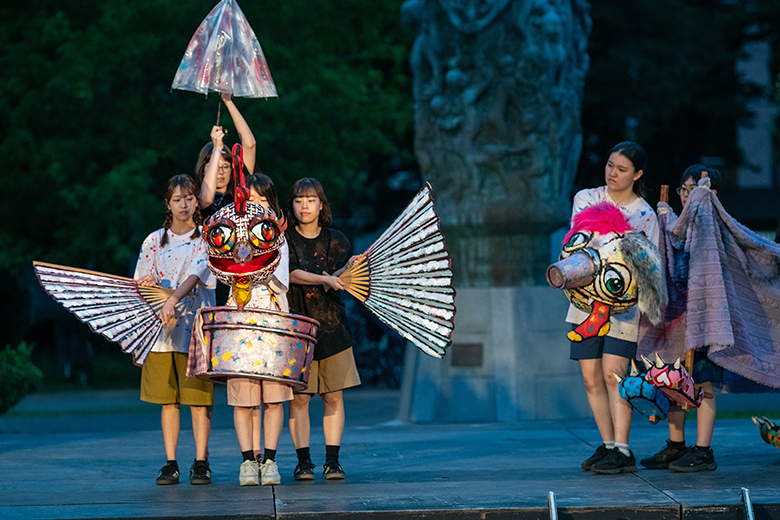
During my stay in Japan, I took part in a series of study visits and working meetings with representatives of Japanese puppet theatres. The aim of the trip was to establish international partnerships and learn about working methods that could be applied to “Rehab”, a project being developed as part of the European Capital of Culture Lublin 2029 programme.

“Rehab” explores the use of puppet theatre as a tool to support children and young people in dealing with traumatic experiences, particularly those related to war, but also natural disasters and other crisis situations.

One of the places I visited was Hitomiza Puppet Theatre in Kawasaki. I learned about the theatre’s history, its organisational model and its artistic and educational work. An important part of the visit was an introduction to the bunraku tradition, as well as practical puppet animation workshops. We also discussed the theatre’s work with children and possible cooperation on future educational and social projects. At Puk Puppet Theatre in Tokyo, our discussions focused on the repertoire, educational activities and the organisation of the theatre’s work. We exchanged experiences in theatre for children, theatre education and social projects. The possibility of developing international cooperation was also discussed. Another stop was Yamabikoza Theatre in Sapporo, where I was particularly interested in approaches to working with children and young people. We talked about how puppet theatre can support creativity, emotional expression and the development of a sense of safety. The experience of theatres working with communities affected by natural disasters provided an important context for these discussions. At Kogumaza Theatre in Sapporo, I took part in meetings marking the theatre’s 50th anniversary. It was an opportunity to learn about the institution’s history, its relationship with the local community and its long-term artistic and educational work with children. We also discussed the possibility of Japanese artists taking part in projects developed in Lublin.

An important part of the trip was the World Children’s Puppet Theatre Forum in Sapporo. During the forum, I presented the work of the H. Ch. Andersen Theatre in Lublin, including its educational, social and international projects. Alongside theatres from Thailand, Taiwan, the Czech Republic, Slovakia and Hungary, I also presented the concept behind “Rehab”. A significant part of the discussions focused on Japanese experiences of working with children following natural disasters. I was particularly interested in the work carried out after the earthquake, tsunami and Fukushima nuclear disaster. We discussed how puppet theatre can help children express their emotions, rebuild a sense of safety and return to everyday life after traumatic events.

This experience is important for the further development of “Rehab”. One of the project’s aims is to establish an international network of experts: psychologists, educators and artists who use puppet theatre in their work with children and young people affected by trauma. Japanese experience could become one of the points of reference for developing this model.

During the meetings, we also discussed ways of involving Japanese artists, educators and specialists in the activities of European Capital of Culture Lublin 2029. Ideas included workshops, artistic residencies, knowledge exchange, as well as joint research and educational projects.
The visit to Japan was therefore not only an opportunity to learn more about the traditions of puppet theatre and contemporary approaches to working with children. It also opened discussions about long-term cooperation between institutions in Japan and Lublin. This could lead to joint activities for children and young people who have experienced trauma.

Text: Agata Sakowicz

Meet Up ECoC! 2026. Returning with new partnerships for Lublin 2029

By News

Culture has an inherent quality of boundlessness and the power to connect cities separated by thousands of kilometres. Japan is a particularly important example of our intercultural and international activities. Shortly after winning the European Capital of Culture competition, we established cooperation with EU Japan Fest, which we have been consistently developing for the past year and a half. Thanks to these relationships, we are able to benefit from mobility programmes – creators of projects submitted as part of the ECoC application are embarking on study visits that support the implementation of ideas outlined in the Lublin bid book.

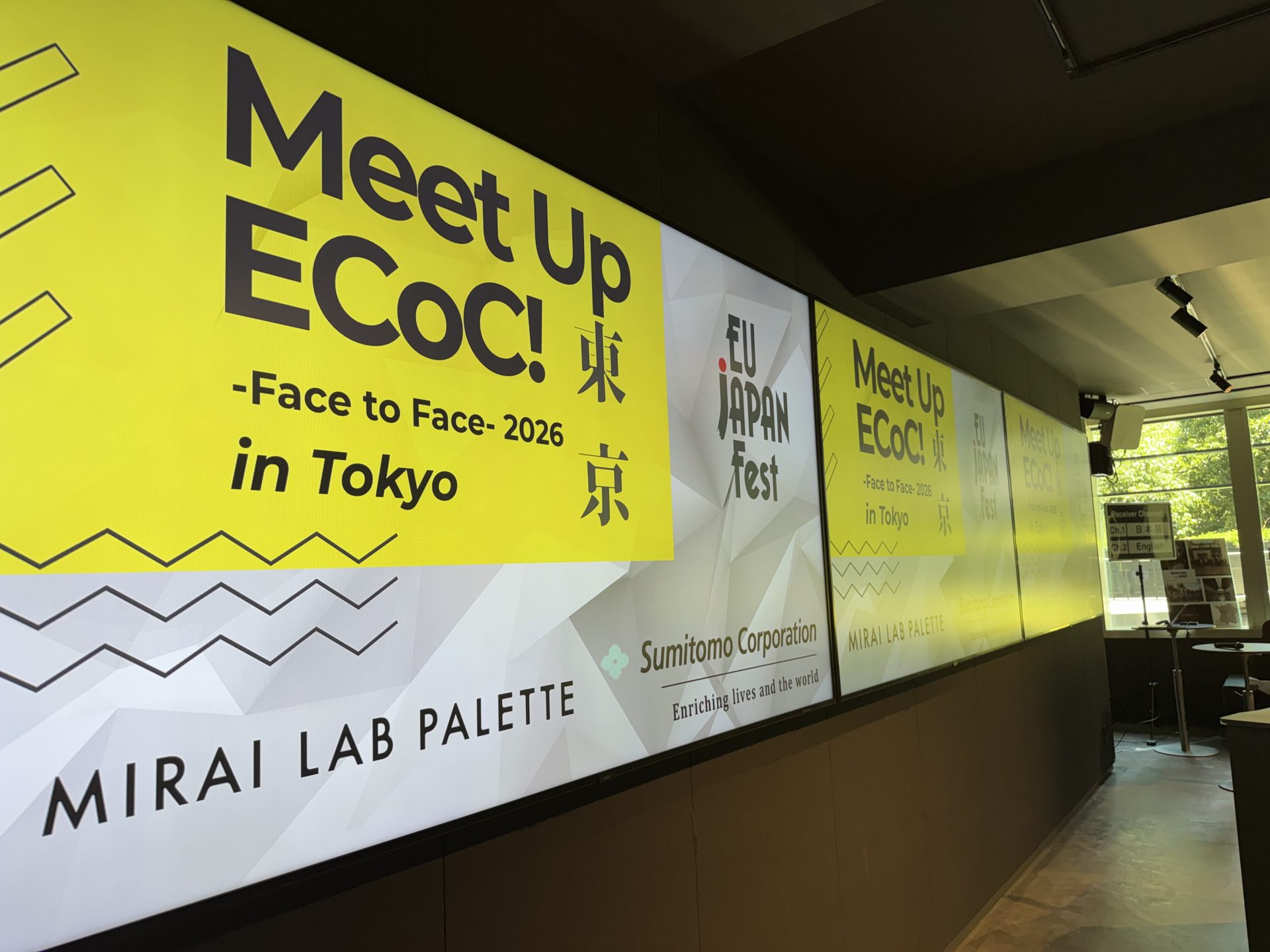
Once a year, EU Japan Fest invites representatives of current and future European Capitals of Culture to the unique Meet Up ECoC! – Face to Face gathering, creating an opportunity for direct exchange with the Japanese cultural and business sectors. These meetings have significant professional and networking value: they facilitate knowledge sharing, the creation of international partnerships and the co-designing of future artistic initiatives. It is here that ideas for joint projects, artistic residencies, exchange programmes and long-term cooperation between Europe and Japan are born. Since 1992, EU Japan Fest has consistently maintained a network of European-Japanese connections, supporting cities holding the ECoC title by linking them with Japanese artists, cultural institutions and business partners. The main goal and mission of EU Japan Fest is to address global social challenges through culture and the arts. Currently, the organisation’s activities are based on several key pillars: empowering young people, coexistence with nature, social regeneration and diversity.

This year’s Meet Up ECoC! – Face to Face was exceptional: it was not limited solely to Tokyo but also included Okinawa, which represents a distinct story in terms of the structure of its cultural sector and its international networks. The Lublin delegation’s visit therefore aimed to explore the cultural environment both from the perspective of the centre and the periphery, as well as to gain a deeper understanding of local contexts through visits to artists’ studios, arts and crafts museums, memorial sites and places of cultural significance.

During the international delegation to Tokyo and Okinawa, the Lublin 2029 European Capital of Culture Re:Union programme was presented several times, including during the international discussion panel Creative Future Creation Challenged by European Capitals of Culture. This was one of the key moments of the programme, dedicated to the role of European Capitals of Culture in addressing contemporary social challenges. The panel brought together representatives of Oulu 2026, Trenčín 2026 and Lublin 2029, who presented their cities’ development strategies and approaches to using culture as a tool for building social resilience, strengthening local communities and stimulating solutions in times of polycrisis. The organisers ensured that we had the opportunity to explore contemporary cultural strategies in Tokyo. During a full-day conference session, we examined the operational models and curatorial approaches of the Watari Museum of Contemporary Art, as well as the relationships between art, architecture and urban space through the concept of Sono Aida (Between) by Akira Fujimoto. We met artists, curators and representatives of cultural institutions from Japan and Europe. Equally important was the opportunity for ECoC representatives to exchange ideas and reflect together on projects that combine local ECoC contexts with Japanese inspirations. The study visit was filled with dozens of meetings with potential partners, visits to museums and cultural institutions, and encounters with inspiring examples of combining heritage, new technologies and artistic practices. Particularly valuable were experiences related to heritage protection, the development of creative industries and the use of culture to revitalise urban spaces – themes that are also highly relevant for Lublin and the emerging Creative District.

The most important element of the Okinawa visit was participation in the Meet Up ECoC! – Face to Face 2026 in Okinawa, organised by the EU-Japan Fest Japan Committee in cooperation with the Okinawa Prefectural Government and local partners. It was the first edition of this format organised outside Tokyo. During the meeting, the programme of European Capital of Culture Lublin 2029 Re:Union was presented, with particular emphasis on the role of culture as a tool for building social resilience and intercultural dialogue. The discussion also highlighted the importance of strengthening local craftsmanship and integrating it into the context of contemporary art. Traditional crafts and local practices can become a foundation for contemporary creative industries – an approach that we had the opportunity to observe through numerous examples in Okinawa. A key experience was learning about the model of protecting and using Okinawa’s cultural heritage as a living resource for social and economic development. We visited some of Okinawa’s most important cultural heritage centres, including the Okinawa Prefectural Museum & Art Museum, Shurijo Castle Park (a symbol of the former Ryukyu Kingdom), Shiroma Bingata Studio, Sakima Art Museum, Okinawa Crafts Industry Promotion Center, Kogei no Mori, Okinawa Karate Kaikan and Peace Memorial Park.

The journey to Japan demonstrated that diverse cultural heritage is an active resource for the future and serves to strengthen communities. Awareness of complex and difficult historical processes goes hand in hand with creative approaches to solving contemporary challenges. The visit also highlighted the enormous power of private patronage in the development and promotion of culture. Cooperation between the public sector, the private sector and artists is essential for sustainable development processes, and the Japanese cultural scene provides a vivid example of this model. We return with new contacts, ideas and partnerships that we will continue to develop on the road towards European Capital of Culture Lublin 2029.

Inspirations from Bourges: report from the study visit to Printemps de Bourges 2026

By News

Participating in the 50th edition of Printemps de Bourges (14th – 19th April, 2026) turned out to be much more than simply attending one of the most important music festivals in France. It was an intense, inspiring experience that showed how many opportunities European cultural cooperation provides today, and demonstrated a pivotal role medium-sized cities can play in setting up international artistic projects. For me, it was also an important reference point in the context of the activities of the Lublin Jazz Festival, the Centre for Culture in Lublin and the preparations for the European Capital of Culture Lublin 2029.

From the very first days, I could feel the unique energy of this place. For years, Printemps de Bourges has been drawing many artists, producers, managers, curators and representatives of cultural institutions from all over Europe. Apart from hosting concerts, it is a space where discussions about the future of culture, new models of cooperation and common European challenges also play a crucial role. Much of the stay revolved around meetings devoted to building long-term international partnerships, supporting young artists and creating programs based on real cooperation between institutions from different countries. Discussions on financing culture, organizing large-scale events and ways of engaging local communities proved particularly valuable. It is at such meetings that projects are born, which a few years later become important European undertakings.

Among the most fruitful meetings during my stay in Bourges were conversations with people who really co-create the directions of the development of contemporary European culture. Particularly valuable was the meeting with Pascal Keiser and Louise Tournillon who designed together the ECoC Bourges 2028 candidacy, which serves as one of the tools for engaging residents and participants of the European Capital of Culture programme; as well as Boris Vedel, Managing Director of Le Printemps de Bourges. Conversations with the people responsible for such significant projects allowed us to better understand how to effectively combine an ambitious, long-term vision of cultural development with everyday organisational practice, attracting an audience and creating lasting relationships between institutions, artists and residents.

A fundamental element of the visit was the meetings with representatives of cities completing the European Capital of Culture programme. Particularly inspiring were the talks with Tessa Melzer from Bourges 2028, the delegation of the European Capital of Culture Trenčín 2026 – Martin Mojžiš, Laura Magičová and Pavol Čižmár and Linda Netland representing the European Capital of Culture Bodø 2024. The exchange of experiences showed how many common challenges and opportunities medium-sized cities face, which build their visibility, strengthen local identity and attract international partners thanks to culture.
These conversations were particularly valuable in the context of preparations for Lublin 2029. They showed that the success of the European Capital of Culture does not depend solely on the size of the city or the budget, but above all on a consistent vision, the courage to cooperate and the engagement of residents. Bourges is an extremely inspiring example in this respect – it is a city that shapes its future thanks to culture. Additionally, the active support of local authorities, including the mayor himself, makes cultural activities an important element of the development strategy for the whole city. This experience gives hope and shows that Lublin also has the potential to indeed mark its presence on the European map through culture.

The panel discussion on the mental health of artists was also extremely meaningful. In the music and culture industry, it is more and more noticeable that behind stage success there is often enormous pressure, job insecurity, an intense lifestyle and the need to constantly meet high expectations. This topic resonated strongly in the context of young artists at the beginning of their artistic journey. The discussion showed that taking care of mental well-being is no longer just an additional element of cultural policy, as it becomes one of the foundations of a responsible and modern cultural sector.
Another vital point of the programme was also visiting Antre Peaux – an independent cultural centre operating in post-industrial spaces. This place shows that innovative artistic activities do not have to be created only in large institutions. In fact, it is quite the opposite –  it is often grassroots initiatives, firmly rooted locally, that become laboratories of new ideas and important centres of creative experimentation.

The festival features over 150 performers across 11 stages and attracts about 250,000 participants. Bourges turned into a true musical capital of France. It is difficult to describe even a small part of the program, because music fills every space – large stages, clubs, bars, the squares and streets of the city. The use of post-industrial infrastructure and huge concert halls gives  the event a modern, dynamic character which is also particularly impressive.
I spent the most time at the iNOUïS stage, which for years has been considered one of the most interesting places to discover new talents. It is a remarkable supporting programme for young artists, based on a network of 28 regional branches in France and Francophone countries and more than 350 professionals who throughout the year are looking for artists who can shape the future of the music scene. That’s where I heard the most exciting concerts of the festival – from French hip-hop, through jazz-rock and math rock, to sounds mixing rap, rock and heavy metal altogether. The performances that particularly stayed with me were those by Free Zorba The Hooligan, Cheap Jewels, Holyteeth, and Sahëlie. It is such concerts that remind us that the most interesting musical phenomena are often born before they reach the largest stages.

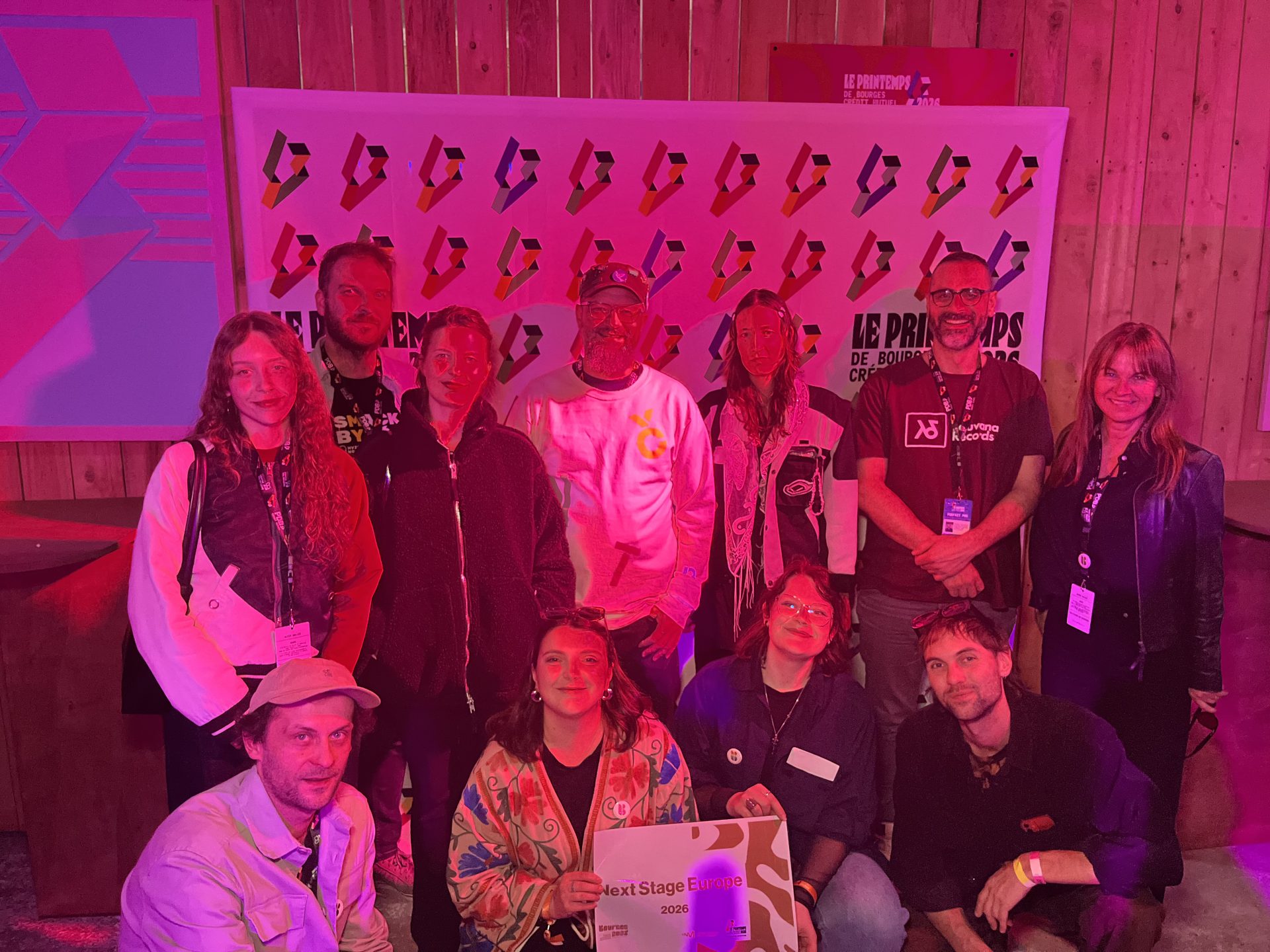
The invitation to participate in the event was possible thanks to the Next Stage Europe initiative, run by Bourges 2028. It is an open platform enabling artists from other European Capitals of Culture to present their work during the festival. The initiative is a perfect example of how the idea of a European Capital of Culture can translate into a real artistic exchange, establishing contacts and developing lasting cooperations between cities.
The trip also had a huge networking value. Meetings with representatives of music circles and institutions such as IRCAM, as well as numerous conversations with organizers, producers and cultural animators from different parts of Europe created a space for establishing many new contacts and talks about future joint activities.

I am leaving Bourges with the feeling that European culture is currently at an extremely interesting stage. There is a great need for cooperation, exchange of experience and setting up projects across borders. At the same time, the role of cities such as Lublin – ambitious, creative and ready to co-create international cultural networks – is becoming more and more apparent. Printemps de Bourges has shown that the future of culture is not created only in the largest metropolises. It is very often born in places like Bourges where passion, courage, local energy and a European perspective meet. This experience is not only a valuable source of inspiration; it also gives real hope for new partnerships, projects and opportunities for cooperation on the way to Lublin 2029.

Written by:
Adam Szczepanek

Translated by Zofia Świerszcz

Proofread by Aleksandra Górecka

Inspirations from Utrecht: A Report from the Study Visit to the SPRING Performing Arts Festival

By News

Another edition of the prestigious SPRING Performing Arts Festival in Utrecht has come and gone. This year, a delegation from the Centre for Culture in Lublin took part in a study visit.
The aim of our study visit was broadening the European perspective on the performing arts, renewing and establishing new contacts with international organisers and artists. In addition, it was a key step in preparing for the theatrical projects within the European Capital of Culture programme, such as La Commedia Divina and Theatre Confrontations 2029.
Below, we present an overview of the most interesting artistic events we had the chance to see, and which we found to be a tremendous source of inspiration.

Festival overview:

What Will We Do Without Exile
This exceptional art installation addresses the deeply topical subject of displacement, yet does so without resorting to graphic violence or journalistic literalness. The creators find a way to speak about forced resettlement and genocide… without saying it outright. Instead, they rely on powerful sensory means — the scent of earth, citrus trees, and herbs makes the message remarkably sensual, intimate, and subtle, without losing any of its original expressive force.

Engeki Quest
This participatory project, staged as an urban game, is an intriguing search for a new story about place and space. Here, the newcomer’s perspective is filtered through the experience of a long-term resident. Developed over the years in numerous European cities, the project is built around riddles and deep reflection. It gives participants the chance to take alternative tourist routes and enter the authentic fabric of the city through active discovery and lived experience.

She She Pop & Sandbox Collective
This theatrical performance takes the broadly understood “hospitality” as its central theme. Two women’s collectives have created a piece built on a defined working protocol, but also on improvisation. The starting premise was the complete absence of common ground, paired with the acceptance that the differences between them would remain permanent — exactly how they are meant to be. The performance makes masterful use of distance and irony, while striking deeply at fundamental values such as freedom and dignity — values that can be understood in radically different ways.

Ridden
This movement and dance performance searches for a form that hovers between ritual, sport, and theatre. The creators focus on examining relationships in the aftermath of disaster. At the center of their attention are the bonds between people, nature, the endless cycle of life, and the deeply rooted instinct for survival.

Radio Vinci Park
This extraordinary performance presents a pure, hypnotic stage form. In this space, an unsettling, statically present harpsichord score meets a motorcyclist and a compelling performance artist. Butoh dance combined with motorcycle riding works like a collision between Eros and Thanatos, building a sensual and moving story about seduction and death.

The Shrine
A committed performance taking the form of radical defiance, delivered with full theatrical intensity. The piece draws heavily on colonialism and critiques of capitalism and systems of power. The subject is presented through both a historical and cultural lens, strongly engaging the viewer on an intellectual and emotional level.

Home Bound
An evolving spatial installation that took shape on the city’s main square, right beneath the library, over the entire course of the festival. Built from ropes, string, tapestries, and hammocks, and incorporating other objects along the way, the structure had a powerful impact on the public space. Each day it became a different, ever-growing work, opening up space for creativity and shared participation among artists, participants, audiences, and passers-by alike. The building of social bonds was visible here both figuratively and literally.

Organisationally well-prepared and artistically of the highest calibre, SPRING Festival can serve as an ideal point of reference for Lublin. The wealth of experience it offers in the performing arts will not only help us develop the European Capital of Culture programme, but will also enrich the outlook of institutions and festivals operating year-round in Lublin, such as Open City, the International Dance Theatre Festival, Percepcje, and Theatre Confrontations. We paid particular attention to the “festival-in-a-festival model” embodied by the Asia-Europe Cultural Festival. Within its framework, nine diverse events were realised — including films, installations, and performances — promoting artistic collaboration between the two continents. This recurring platform, presented in Europe in even-numbered years, shows how effectively intercultural dialogue can be built.
The contacts made in Utrecht with curators, directors, and artists will allow us to build a solid foundation for future theatrical, performative, literary, and social projects. The trip confirmed our conviction that a continued presence at this kind of European event is key to the dynamic development of local culture and to building international bridges.
The study visit was carried out as part of preparations for the European Capital of Culture programmes.

Text
Ksenia Duńska
Ewa Molik

Translated by Aleksandra Górecka
Proofread by Gabriela Niewadzi

Breaking the routine. Ivan Davydenko shares his experience of a literary residency within the “Culture at Work” project

By News

After this month, I think of the residency not as a series of “interventions”, but rather as an exercise in recovering visibility, choice, and relation. It was not about me coming into the company and “teaching art” to anyone. It was more about introducing a somewhat different dynamic. A little disruption, but a meaningful one. A few questions, a few shifts. A little conversation about what we listen to, what we read, how we think, what we regard as our own, and what we have accepted unknowingly. If, as a result of those conversations, some processes were set in motion in people, even small ones, even without a ready answer, that is already a great deal. It is not always visible directly. Sometimes it comes only in the form of a joke, an association, a change of tone, a question asked in passing. But that is usually where something begins.

At a time when there is an ongoing debate about artists’ working conditions and their role in society, it is worth looking at specific examples that demonstrate how culture works outside institutions and stages. The “Culture at Work” (“Kultura w Pracy”) project originated from the belief that the presence of artists can enrich workplaces, bring in new perspectives and create space for conversations where life usually revolves around routine. Art can be present in everyday spaces, even those where you might not expect to find it – in companies and workplaces too.
Ivan Davydenko, who collaborated on the first literary residency of the programme, shares his experience from a month spent at Medisept. During this time, he observed, held numerous conversations, and wrote texts at the heart of the company. As he puts it, “One of its assumptions, after all, was the reduction of isolation: opening companies to the presence of an artist, and opening the artist to people with whom he would not ordinarily have direct contact.”
In the interview below, you will learn why, according to the author, the task of the artist is, among other things, to dismantle harmful ideas about art and culture, and how the presence of an artist in a workplace may foster conversations that change the way you perceive yourself and others.
We encourage you to read the first interview in the series summarising the literary residencies that were completed within the “Culture at Work” project. The interview and its editorial preparation were carried out by Ralph Talmont. Please scroll down for the English version.

CLICK HERE TO READ THE WHOLE INTERVIEW WITH IVAN DAVYDENKO

Translated by Zofia Świerszcz
Proofread by Aleksandra Górecka

From the Union of Lublin to the European Capital of Culture: Jarosław Koziara’s Balloons Return to Bramowa Street

By News

Jarosław Koziara’s balloons are returning to Bramowa Street. As part of the celebrations marking the Union of Lublin Day, sixteen monumental installations will once again float above the historic route leading to the Old Town. This year, the installation tells not only the story of the city’s celebration, but also of the idea of European unity and Lublin’s journey towards the title of European Capital of Culture 2029.

The installation will feature sixteen balloons representing past, present and future European Capitals of Culture. Each balloon reflects the identity of a different city, together creating a symbolic image of Europe—diverse, yet united by shared values and the exchange of experiences. Under the common slogan Re:UNION, the balloons will transform the space above Bramowa Street into a visual dialogue between cities, cultures and histories.

Jarosław Koziara’s project has long been one of the most distinctive artistic interventions in Lublin’s public space.

This year’s edition is a symbolic invitation to reflect on Lublin’s future as a city open to culture, dialogue and collaboration. For several days, Bramowa Street will become a place where two ideas meet: the memory of the Union of Lublin and the vision of a Europe built through culture.

🇺🇦 Lviv • 🇲🇪 Nikšić • 🇯🇵 Japan FEST • 🇱🇹 Kaunas • 🇫🇮 Oulu • 🇸🇰 Trenčín • 🇱🇻 Liepāja • 🇵🇹 Évora • 🇫🇷 Bourges • 🇲🇰 Skopje • 🇨🇿 České Budějovice • 🇸🇪 Kiruna • 🇧🇪 Leuven • 🇨🇾 Larnaca • 🇩🇪 Chemnitz • 🇸🇮 Nova Gorica,

along with the Polish Capitals of Culture: Bielsko-Biała, Katowice and Kołobrzeg.

fot. Tomasz Kulbowski

Under the slogan RE:UNION, the past meets the future—the memory of the Union of Lublin merges with a vision of Europe in which culture builds bridges between people and cities.

See you on Bramowa Street!

Lessons from Évora 2027: City, Residents, and Heritage

By News

Next stop: Évora 2027! What have we learnt from the future European Capital of Culture?
The middle of May 2026 brought us an exceptionally inspiring journey to the Portuguese city of Évora. We took part in the international meeting of the “ECoC Family – 20th Anniversary” network. The event created a space for exchanging experiences between the previous, current and next European Capitals of Culture — an exchange that always brings fresh perspectives and new insights.
During dynamic expert panels, we discussed the conceptualisation of programmes, the level of European engagement and sustainable long-term legacy. We also had the opportunity to experience an up-close preview of Évora’s artistic programme for 2027.

From Theory to Living Culture in Urban Space
On the first day of the conference, one of the highlights of the programme was a panel devoted to the themes of host cities. Representatives of European Capitals of Culture – Andrea Pier from Chemnitz 2025, Sjoerd Bootsma from Leeuwarden-Fryslân 2018, and John Romão, Artistic Director of Évora 2027 – discussed how the original idea of ECoC evolves and shifts throughout the demanding process of turning it into reality. The speakers emphasised the significant impact that local policies and the cultural environment of each place have on this process. Every city must come to terms with the history of its own region. The key to success lies in bringing the idea of Europeanness and the European Capital of Culture directly to residents. It is them who should feel like citizens of Europe and co-creators of the programme by volunteering, taking part in open calls and directly participating in artistic projects.

A Taste of Évora 2027
Theory quickly gave way to practice. During the curatorial visit entitled “A Taste of Évora 2027 – Artistic Programme”, we saw how artistic projects can work in public space and genuinely engage local communities. By the city’s cathedral, Helena Zuber presented “Ebora Musica” – a project focused on musical heritage as a tool for building community and fostering international relations.
The Malvada collective introduced “Aqueduto”, a project that masterfully weaves together the city’s historic infrastructure and urban landscape with storytelling. Sara Anjo talked about her project dedicated to the Almansor River; the project is based on a relationship with the natural environment, the memory of place and an exploration of the local context. At the former bus station Antiga Rodoviária, John Romão presented the concept of the future “House of Crafts” (“Casa do Saber-Fazer”) – a space connected with local craft and handicraft traditions. In the city garden Jardim Público de Évora, near the Palácio de Dom Manuel, we had the opportunity to see the performance of the multigenerational community choir “Coro Vozes de Abril”. It was a vivid example of a project built on active participation by residents, and the establishment of long-term relationships through culture. The day concluded with a performance of the traditional puppet show called “Bonecos de Santo Aleixo”, produced by Centro Dramático de Évora (Cendrev), who showed how Évora 2027 plans to weave the traditional intangible heritage of the Alentejo region into a modern, cultural programme.

Heritage as the Foundation of a Modern Institution
The São Bento de Cástris monastery serves as the official headquarters of the Évora 2027 team. It is a great example of adapting historic heritage to the needs of a contemporary cultural institution: former monastic rooms have become a working space, and a venue for debates, international gatherings, and initiatives that are developed together with residents. The organisers demonstrate that historic architecture can become a powerful part of the narrative and identity of the entire programme.
Within these inspiring walls, we took part in two expert panels. The first one was devoted to the European engagement was moderated by Vuk Radulovic. The panel was focused on a question of how to develop international partnerships without losing a strong connection with the local community. Seasoned ECoC experts – Beatriz Garcia and Else Christensen-Redzepovic – shared their experience alongside Mija Lorbek, representing Nova Gorica/Gorizia 2025. The second discussion was devoted to legacy, and addressed the lasting impact of the programme after the year of celebration comes to an end. The experts – Rafaela Neiva Ganga from the University of Liverpool, Jan Stepan from Depo 2015, and Pascal Keiser from Bourges 2028 – discussed the long-term influence of the European Capital of Culture title on urban development, the expanding the cultural sector’s capacities and engagement of residents.

The study visit to Évora proved to be highly valuable from the perspective of networking and mutual exchange. Gathering insights from the experiences of experts representing other European Capitals of Culture is an invaluable resource. They will undoubtedly play a significant role in the continued dynamic development of the European Capital of Culture Lublin 2029 programme.

Marta Ryczkowska
Małgorzata Drozd-Domaciuk

Translated by: Aleksandra Górecka
Proofread by: Zofia Świerszcz

Between everyday life and performance. A new residency in the “Culture at Work” project.

By News

Following the first literary residency carried out in collaboration with Ivan Davydenko, the “Culture at Work” („Kultura w pracy”) project is entering its next stage. The second artistic residency will begin on the 14th of May, developed in partnership with Medisept and Tarasola.

This time, visual art, performance and practices based on the observation of everyday relationships are entering the workplace. The next artist-in-residence is Barbara Gryka – a visual artist from Końskowola, living and working in Lublin. In her practice, she explores the ways we function together; she examines social rituals, mechanisms of norm construction and tensions between the private and the public. In her works, she blurs the boundaries between the past and the present, seeking to imagine new forms of community and relationships in the context of Eastern Europe.

Her work is rooted in performance, embroidery, installation, and video. In one of her projects, she visited the residents of the LSM housing estate in Lublin, knocking on doors and inviting people to talk. In the “`Motorcycles Dance” project („Taniec Motocykli”), she led a group of eight men on motorcycles performing a Lublin folk dance. In a different one, called “Dance at Hights” („Taniec na Wysokości”), she collaborated with women practicing high-altitude climbing, leading them in the rhythm of a folk dance along the walls of a former bunker. In her work, she also reaches back into historical archives, addressing women’s issues, memory and systemic violence. Her projects often begin with encounters and the careful observation of people and places.

Barbara Gryka’s works have been presented, among others, at the Museum of Modern Art and Zachęta in Warsaw, during Manifesta 14, at Galeria Labirynt in Lublin and at the Kaunas Biennial. The artist has also completed residencies in Barcelona, Athens and Ostrava. In 2026, she received a Doctor of Fine Arts degree from the Academy of Fine Arts in Warsaw.
Her project works develop the idea of art functioning close to everyday life – not as an addition to the workplace, but as an impulse for conversation, pause and looking at familiar spaces from a different perspective. The residency will be based on contact with employees, the rhythm of everyday activities and the relationships built within the organization. The next artistic activities will emerge precisely from these encounters.

The “Culture at Work” („Kultura w pracy”) project, implemented as part of European Capital of Culture Lublin 2029, develops the format of artistic residencies in workplaces, inviting artists to carry out activities directly within professional environments.