All Posts By

ESK

The Urban Apitherapy Center

By News

The Urban Apitherapy Center is located within the monastery complex of St. Paul on Bernardyńska Street in Lublin. The project is being carried out by Marcin Sudziński, Barbara Wybacz, and the Archdiocese of Lublin.

As part of international cooperation, partnership agreements were signed between the Archdiocese of Lublin and the Italian high school Istituto di Istruzione Superiore “Galileo Ferraris” (P.zza della Vittoria 3, 13100 Vercelli, Piedmont). The partnership aims to foster Polish-Italian youth exchange in the fields of culture and education. Two meetings have already taken place – one in Italy and another online.

An educational and participatory initiative, “Project: PARK” (September–December 2024), has been implemented. The project involved working with communities of young people, seniors, adults, and foreigners, focusing on social participation, co-creation, and soft activities related to the Park and the Urban Apitherapy Center.

Since March 2025, a new stage of participatory community activities has been underway – the Artistic Community Garden. This stage engages residents directly in conceptual planning and micro-implementation activities within the Urban Apitherapy Center.

Cooperation has also been initiated with partners from Poland and abroad. An example is the exchange of experience in the field of urban beekeeping with the Wola Cultural Center in Warsaw, which included a study visit. Discussions are also ongoing regarding potential collaboration within the partnership between the cities of Vercelli (Piedmont) and Lublin.

Currently, participatory activities with the involvement of local artists are being implemented as part of the Project: PARK – Artistic Community Garden program. Well-known artists are engaged in the initiative. In the next stages, the project is planned to expand to include the European cultural community in the framework of Lublin 2029.

Theatre of Transformation

By News

Theatre of Transformation is an international project created within the framework of the ESK 2029 Lublin Re:Union program. It combines scientific research, knowledge exchange, education, theatrical practice, publishing activity, performances, and the creation of a performative archive. Together with a new generation of artists – by creating opportunities for encounters with directors, actors, performers, and teachers who had the chance to work with Jerzy Grotowski – we aim to test and update the ideas and practices of the Theatre of Transformation.

On the sixtieth anniversary of the premiere of Grotowski’s last production, Apocalypsis cum figuris, Lublin – with its unique cultural history – seems to be the right place to ask about the value and strength of this tradition (rooted in the Polish Romantic theatrical heritage, of which Grotowski was both the fulfillment and the most outstanding modern representative) and about the possibilities of continuing this tradition in the postmodern, globalized world of the 21st century.

We also wish – by invoking the broadly understood notion of Transformation – to make Lublin a place of regular meetings of philosophers, anthropologists, scholars of religion, and researchers of diverse traditions of cultural performance. Through a cycle of seminars and two major international conferences with the participation of leading global authorities, we will inquire into fundamental categories of the European cultural sphere: transformation, metamorphosis, transfiguration, metanoia.

In times of multidimensional crisis, affecting not only theatre and culture but also the entire civilizational model of community life inherited from previous generations – a model based on subjectivity and interpersonal relations – we want to ask about possible countermeasures, about remedies. Together with artistic communities and groups identifying with the tradition of the Theatre of Transformation, we want to recognize what is truly valuable and inalienable within it, what carries the potential and qualities of a remedy – and pass it on to future generations.

Lublin, 26.06.2025.
Working meeting of the Theatre of Transformation project team:
Tomasz Rodowicz (Chorea, Łódź),
Prof. Dariusz Kosiński (Jagiellonian University, Kraków),
Paweł Passini (neTTheatre, ESK Lublin 2029),
Grzegorz Kondrasiuk (Maria Curie-Skłodowska University, ESK Lublin 2029).

EUNIC vistis Lublin 2029

By News

Collaboration with national cultural institutes has, for many years, enabled us to present top-quality art in Lublin. Today, as Lublin prepares to take on the role of European Capital of Culture in 2029 and begins implementing the programme outlined in our application, these relationships are becoming even more important. The artistic and cultural programme for the year of celebration should be based as much as possible on international cooperation and carried out in a way that encourages participation and sparks interest among residents of all countries across the European community.


That is why we invited members of the Warsaw EUNIC Cluster to Lublin – part of the international network bringing together national cultural institutes from EU member states responsible for promoting their countries’ culture and arts abroad. EUNIC’s mission is to support intercultural dialogue and promote the role of culture in politics and international relations.

We took our guests on a journey through the city of RE:UNION, visiting key sites central to our bid. We were at the Centre for Culture in Lublin, where they had the chance to meet representatives of Lublin’s cultural community. We visited Baobab, the “Grodzka Gate – NN Theatre” Centre, the National Museum in Lublin, Tytonie.art, and the Wild Children’s Reserve. We ended the day at the Centre for the Meeting of Cultures, taking in the view from one of the city’s most beautiful viewpoints.

It is through encounters like these that a true European cultural community is born – friendly, warm, open, built on mutual trust, curiosity, and diversity. Each visit allows us to rediscover the remarkable potential of the City of Inspiration. The visit was organised in cooperation with the City of Lublin and LOT Metropolia Lublin.

Belgium on its way to the ECoC 2030

By News

Three cities, three cultural visions
The European Capital of Culture, most of all, is the exchange of knowledge and good-quality practice, which is possible thanks to meetings and exploring different places. During our preparations for Lublin 2029, our delegation went on a study trip to Belgium. We visited three incredibly diverse cities which apply for the title of the European Capital of Culture 2030: Namur, Leuven and Molenbeek (municipality of Brussels). Each place presents a unique identity and approach towards culture – on a geographic, social, and thematic level.

Namur – a confluence of the rivers and memory of territory
The capital of the Walloon Region bases its candidacy on a metaphor of “La Confluence” – the confluence of the Sambre and Meuse rivers. During a working meeting we discussed common threads relating to nature: the memory of rivers and green networks. Namur suggests a story about joint responsibility for the future.

Leuven – the city of youth and agency
Leuven, the academic capital of Flanders, focuses on the young people’s potential. During the meetings, we were discussing initiatives which empower the students’ agency and their active role in building the participatory culture. This is an application with a clear reference to the education sector and civic participation.

Molenbeek – solidarity and unity in diversity
In a multicultural municipality of Brussels, Molenbeek, we participated in meetings with experts, advisors, and creators from Kongo, Morocco, the Netherlands, Great Britain, Palestine, and other countries. The slogan of this application is “Sadaka” –the word which means solidarity, honesty, and empathy. Molenbeek’s candidacy is a strong voice in integration and community building over divisions, in the spirit of European values. Each candidacy presents a different cultural approach to the European Capital of Culture idea; however, what connects them is an emphasis put on interpersonal relationships and an attempt to build and reinforce society in times of distress. No later than the 25th of September 2025 we are going to find out which of these cities is going to become the European Capital of Culture 2030. Not only will it be the choice of the city, but also the signal of the direction in which a European cultural policy is going – in a year, which is also going to be a symbolic Jubilee on the 200th anniversary of the independence of Belgium.

Marta Ryczkowska, PhD
ECoC Programme Manager

Tłumaczenie: Daria Nowak
Korekta: Aleksandra Górecka

Spring Forward Aerowaves

By News

Aerowaves is a platform created to give some of the most promising choreographers from across Europe the opportunity to present their work to professionals, curators, and directors of the most important and renowned institutions and festivals both within and beyond Europe.

Held from April 23rd to 27th, the 14th edition of the Spring Forward Aerowaves festival, organized by a.ArtistiAssociati, became part of the official programme of Nova Gorica – Gorizia, the European Capital of Culture 2025.

The Aerowaves 2025 programme featured 21 performances from 17 countries. The shows are selected each year by a group of curators, in which Lublin Dance Theatre from the Centre for Culture in Lublin is always represented. This year’s edition brought together around 300 participants from the international dance community. In addition to choreographers, dancers, and curators from Europe, the event welcomed representatives from Japan, Taiwan, Hong Kong, and Canada, among others. Performances took place on five stages across Gorizia and Nova Gorica, with some open to the local public.

Lublin Dance Theatre was invited to take part in two international projects in collaboration with Tanec Praha and Onassis from Greece. We have also begun discussions about cooperation within VAP, a network of over 20 festivals from across Europe.

With pride, we confirmed the plans to host the Spring Forward festival in Lublin in 2029 — an event included in the programme of the European Capital of Culture Lublin 2029 RE:UNION.

pht. Anna Kalita

Anna Kalita, Lublin Dance Theatre, Centre for Culture in Lublin

Palestine: here and now

By News

On May 10-11 we will launch a new project called “Palestine: Here and Now”, as part of the Voices of the World series, which focuses on the cultures of Southwest Asia and North Africa.

Our objective is to deepen our understanding of the complexity and diversity of the region. In doing so, we are expanding our existing efforts in the area of intercultural dialogue, which are carried out as part of the “Voices of the World” series and already include Jewish, Belarusian, Ukrainian and Caribbean cultures.

The first part of the series “Here and Now” is dedicated to Palestine, which, due to its current situation, requires particular interest and support. This edition will present films addressing a variety of social, political and cultural issues. The programme will also include meetings with filmmakers and translators, providing an opportunity for direct contact with their works and the people involved. There will also be talks and panel discussions. Special attention will be paid to Palestinian culture in the broader context of Arab culture, including analysis of themes such as feminism and the role of women in Arab society, as well as the current political situation.

“Palestine Here and Now” it is a part of the programme Lublin  Beyond the Seas

PROGRAM:
May 10 (Saturday)
12:00 – Decolonization of the Imagination: Arab culture between myth and reality – opening lecture of the festival / conducted by Paweł Hadrian / Centre for Culture Cinema / free entrance.
13:45 – Where the Olive Trees Weep – film / Centre for Culture Cinema / free admission.
15:30 – Intermission.
16:30 – Author’s meeting: Hanna Jankowska / conducted by Paweł Hadrian / Centre for Culture Cinema / free entrance.
16:30 – Little Big Man: about human rights for children – workshops for children / conducted by Ira Filas / Chamber Hall, Basements of the Centre for Culture (Sala Kameralna Piwnice CK).
17:45 – Author’s meeting with Bartosz Wójcik on the book “Rifka” by Mohammed el-Kurd / conducted by Sara Akram / Centre for Culture Cinema / free entrance.
19:00 – We don’t want another land – film / Centre for Culture Cinema / PLN 15.

May 11 (Sunday)
13:00 – Pro-Palestinian activism – panel discussion / Centre for Culture Cinema / free entrance.
14:45 – Jaffa Orange + Artists from Gaza – short film screening / Centre for Culture Cinema / free entrance.
16:00 – Author’s meeting: Elias Jahshan / conducted by Anastas Krusinskaya / Centre for Culture Cinema / free entrance.
17:15 – Farha – film / Centre for Culture Cinema / free entrance.
17:15 – Palestinian Women’s Activism: On the Ground, Online, and Beyond – hybrid meeting with Sophie Richter-Devroe and Karolina Rak / conducted by Mouna El Khala / Chamber Hall, Basements of the Centre for Culture (Sala Kameralna Piwnice CK) / free entrance.
18:30 – Letters for Palestinian Childhoods – hybrid meeting with Rachel Rosen / conducted by Anna Witeska-Młynarczyk.
19:00 – Palestine That Wasn’t – film / Centre for Culture Cinema / free entrance.
19:45 – Hybrid meeting with Azza El Hassan / conducted by Mouna El Khala.

In addition:
Multimedia exhibition: “Letters for Palestinian Childhoods” / Foyer of Centre for Culture Cinema / free entrance.
Translated by Aleksandra Górecka
Proofread by: Daria Nowak

The Finale of the “European Flags” Project

By News

Come celebrate Europe Day with us on May 9th, 2025, at Litewski Square – let’s enjoy this special day together!
A large-scale public installation called “European Flags. RE:UNION”, along with a performance of the Ukrainian Choir “Kanon” from Cherkasy will inspire reflection on our European and local identity, freedom, common areas, relationships, and diversity.
The event “European Flags. RE:UNION” is held within the National Centre for Culture SYNERGIE grant programme, under the auspices the Polish Presidency of the Council of the European Union. The project stems from the cooperation of the following three organisations from Lublin: the Lublin Metropolis Tourist Organisation, the Centre for Culture in Lublin, and the Lublin Metropolitan Area Association; including also external expertise, and international partners.
The aforementioned event will mark the finale of initiatives aimed at forging new relationships and fostering those already established within the local community. The installation will be of a social nature – it will inspire us to build a community through artistic activities, and encourage participation in cultural life. Participants will take part in a series of workshops, conducted using community art methods. The inhabitants of the Lublin Metropolitan Area will create 100 customised flags which will be displayed as an installation, along with the authors’ portraits and their story.

The message behind the happening will be the idea of RE:UNION, as stated in the LUBLIN ECoC 2029 application, which is construed as integration, merge of broken ties, a dialogue between different cultures and generations, tradition and modernity, past and future, as well as the acceptance of a multifaceted value system, and a new, inclusive social contract.

Completing the project will serve as the inauguration of joint initiatives among the communities of the municipalities that declared their contribution to the Cultural Union of the Metropolitan Area within the preparation process for the celebration of the European Capital of Culture Lublin 2029.
Funded by the Ministry of Culture and National Heritage within the framework of the SYNERGIE grant programme.


Translated by Zofia Świerszcz
Proofread by Aleksandra Górecka

Young artists – challanges and reality

By News

Lublin 2029 at the “Young artists – challenges and reality” conference

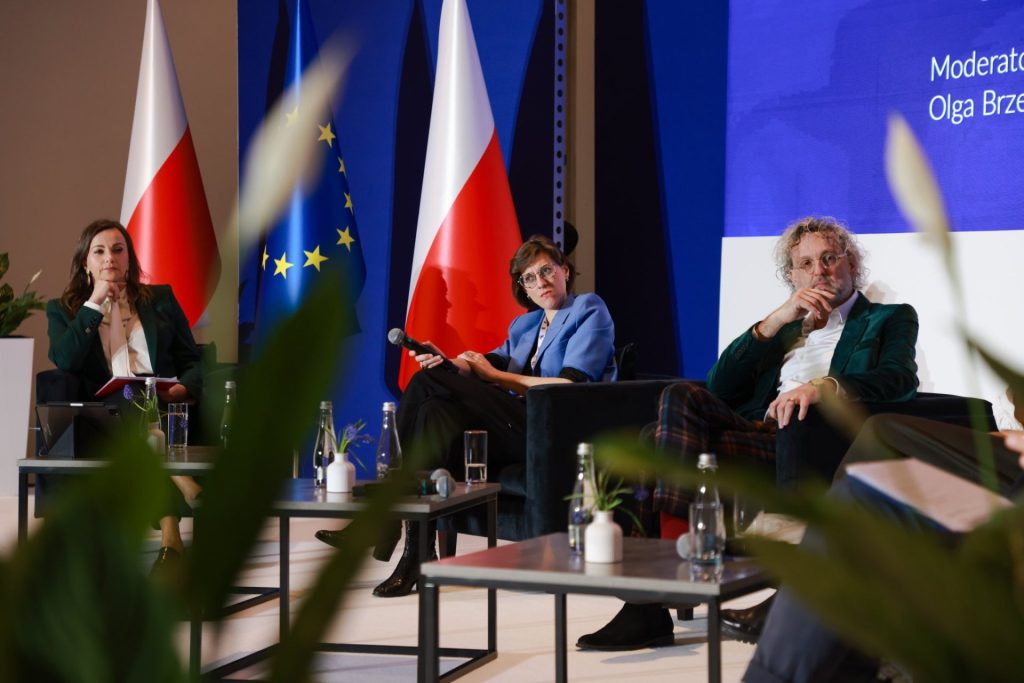
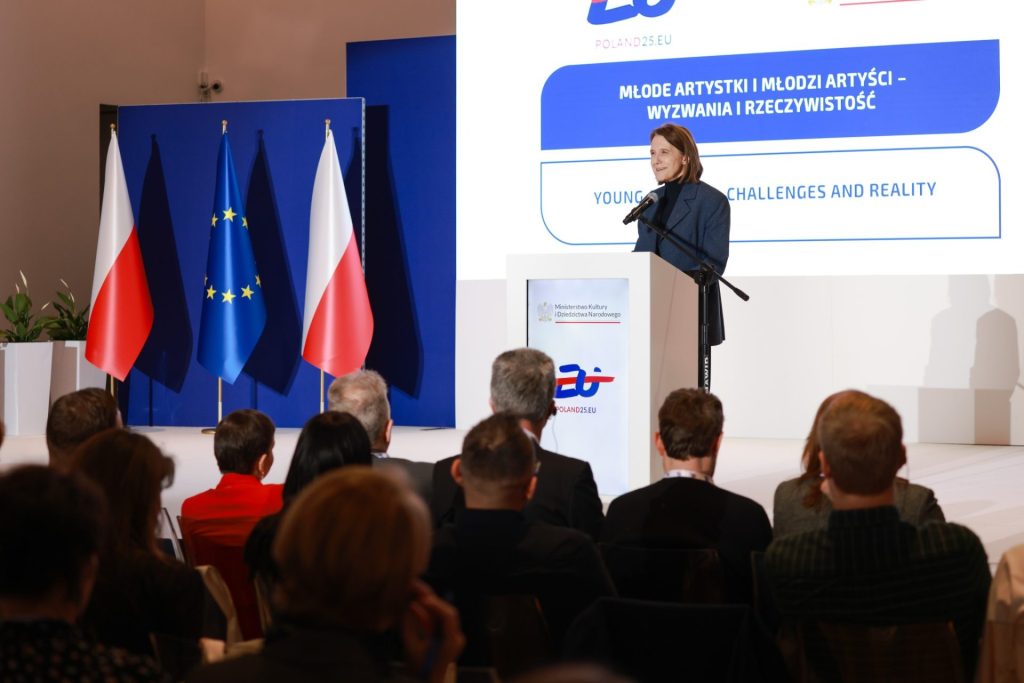
Can culture be an answer to the challenges that security-focused Europe faces? From April 9 to 10, 2025, the National Gallery of Art in Zachęta hosted an international conference on the situation of young artists in the labour market. The event, organized as part of the Polish presidency of the Council of the EU, convened creative and managerial individuals, and representatives of cultural institutions from across Europe. Discussed topics included artists’ mobility, access to education, planning a career path, equality and sustainability in the cultural sector, and the future of creative professions in the age of AI.

Photo by Danuta Matloch / Ministry of Culture and National Heritage

Agnieszka Polska, whose works have been exhibited in prestigious galleries, such as MoMA and Tate Modern gave the inaugural speech. The visual artist and lecturer at foreign art universities talked about establishing an international career. In her opening speech, Agnieszka Polska posed the question of whether this Period of Unrest is the right time to redefine the role of the artist in the modern world. She stressed that the imaginative resources at the disposal of the creative community do make it possible to fully grasp growing social and political problems from non-obvious, often unpredictable perspectives.


The second speech was delivered by Philippe Kern, advisor to the European Commission on cultural policy, who presented European strategies for supporting the artists. The presentation was followed by a series of six panel discussions, during which experts and artists debated key aspects of functioning in artistic and market reality. They debated, among other things, the need for mentoring programs, artist residencies and cultural incubators, as well as the need to network creative communities. They also discussed the need for equal opportunities in access to art education, regardless of social background or place of residence, and the role of cultural education, starting even at the school stage, as a key foundation for future artistic careers.

Photo by Danuta Matloch / Ministry of Culture and National Heritage

The Lublin 2029 team’s participation in the event was a perfect opportunity to develop a network of cooperation with European partners, and to reflect more deeply on the role young artists play in the future of culture. The conference truly aligned with the values and goals of the European Capital of Culture programme, which focuses on agency, diversity, and long-term support for artists of the new generation.

Translated by Aleksandra Górecka

Proofread by Zofia Świerszcz

Performance “2129” – A Jubilee Journey into the Future of Student Culture

By News

We have witnessed six extraordinary performances of “2129”, a jubilee event created to celebrate the 60th anniversary of the Academic Center of Culture and Media UMCS Chatka Żaka. It is also part of the European Student Capital of Culture program – a special, premiere performance Lublin 2129, a theatrical story about Lublin as ESK 100 years from now, told through the eyes of students (spring 2025 performances).

Since its premiere, the performance has been seen by over 1,500 viewers, and the excitement remains – because “2129” is more than just theater. It is a timeless journey through the history, present, and future of student culture, told through movement, visuals, sound, and emotions.

Michał Puła

In the year 2129, time capsules drift through space, carrying the legacy of a world that no longer exists. Inside them are memories, art, emotions, music, and rebellion – everything that has developed over decades within the walls of Chatka Żaka. Will there be anyone able to understand it? Will human sensitivity survive in a world ruled by algorithms?

“2129” is:

an artistic time capsule inspired by the history and spirit of Chatka Żaka,

a performance combining theater, live music, projections, archival voices, and choreography,

a story about the importance of nurturing culture and creative expression,

a manifesto showing that art – even in the distant future – can be a lifeline for humanity.

Michał Puła

The performance “2129” was realized as part of the project “City of Culture – 60 Years of Student Culture – Student Theater 2.0”, in collaboration with the ACKiM UMCS Chatka Żaka Foundation, with the support of the City of Lublin.

40 years of European Capitals of Culture

By News

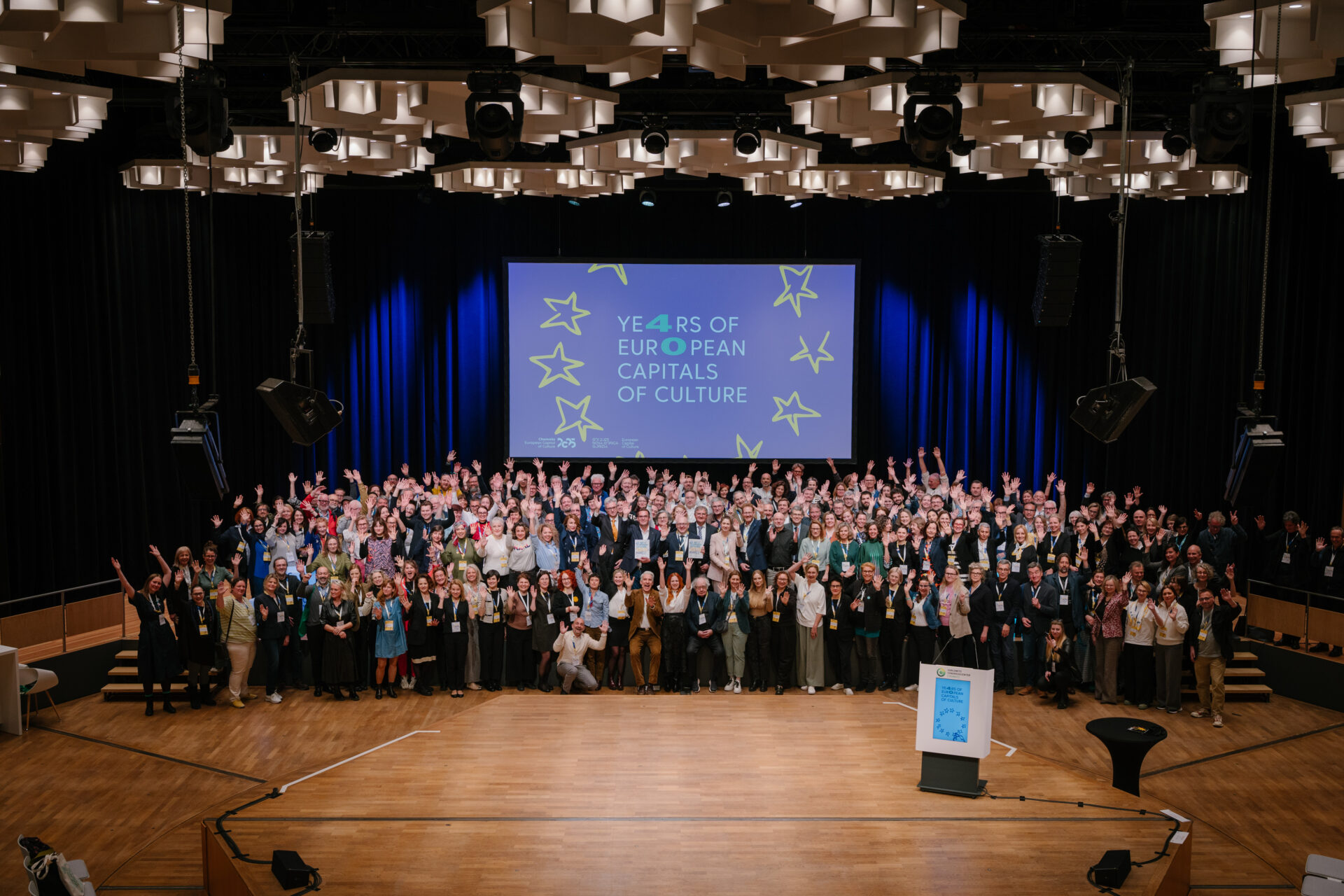
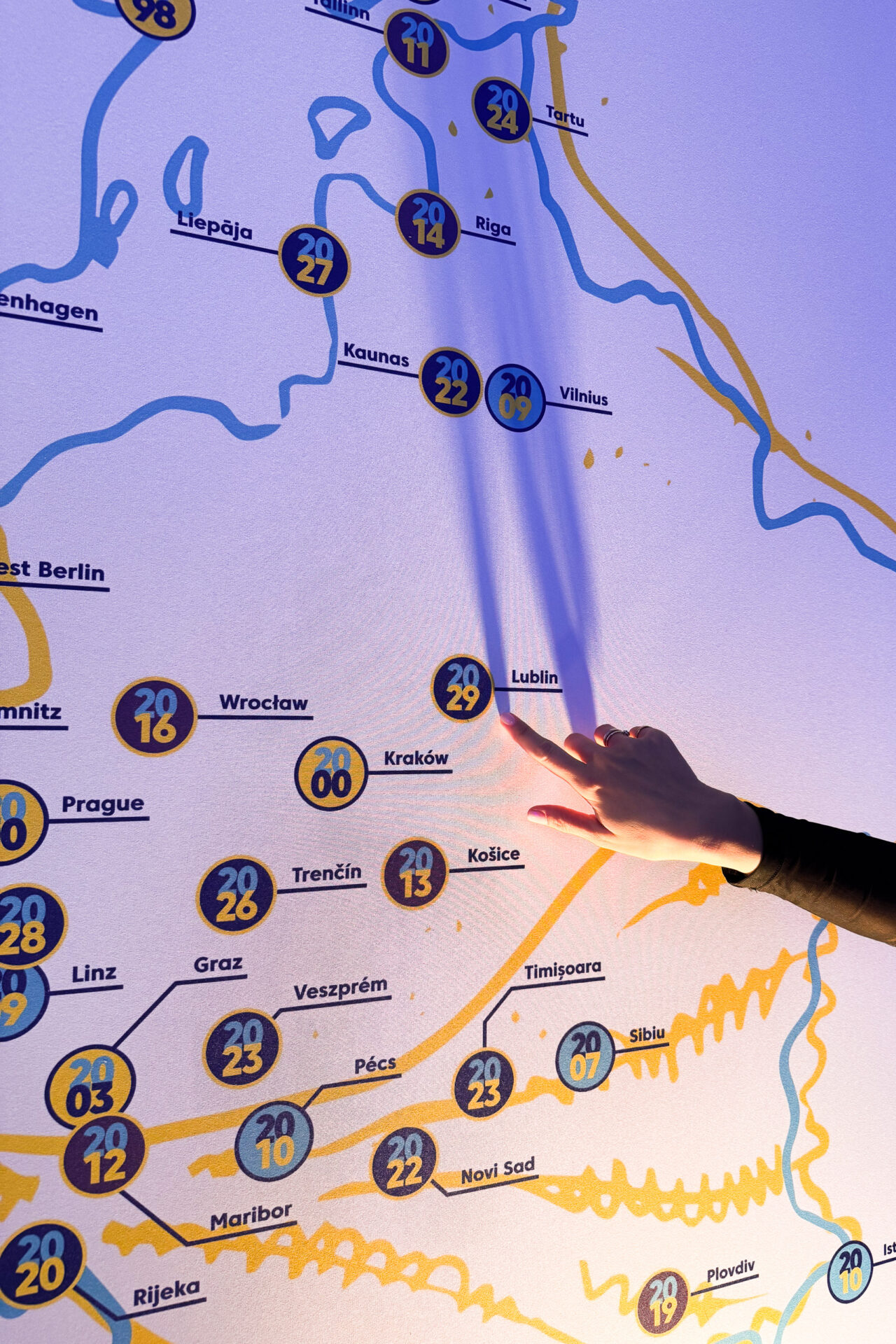
Could Melina Mercouri, when she initiated the European Capital of Culture project in 1985, have foreseen how far it would come? A united Europe, 56 capitals, 250 conference participants from all EU countries, representatives of the European Parliament, the European Committee of the Regions, the European Commission, the diplomatic corps, as well as national and local governments.

Together, they celebrate the 40th anniversary of this remarkable initiative that has boldly transformed the European Community. They work on shaping the future of culture in Europe and share what is most valuable – experience built on diversity. Together, we reflect on 40 years of our history, discuss successes, the need for change, and a shifting reality. We are working on the future of the European Capital of Culture and Lublin 2029.

fot. Johannes Richter

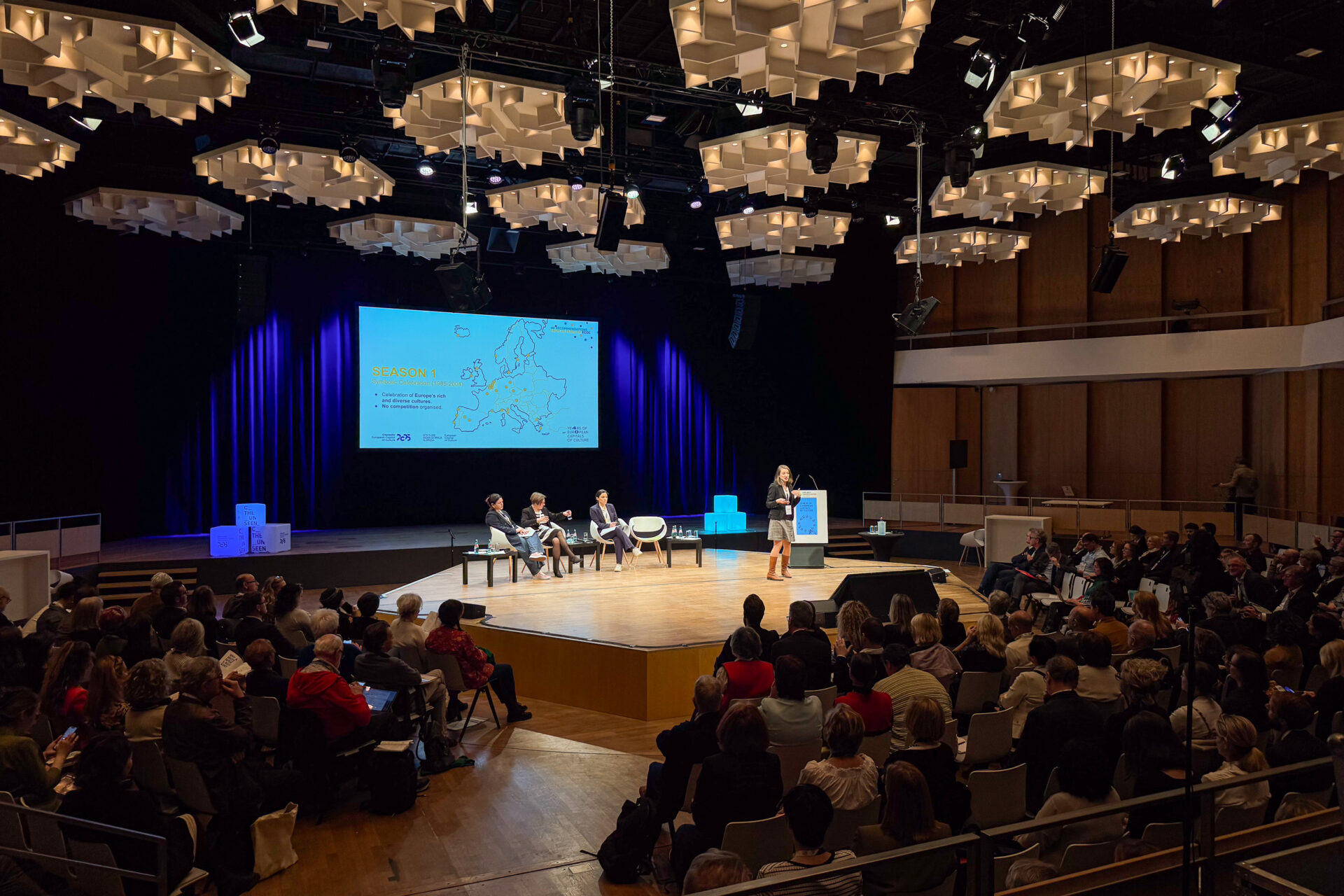
In about two years, the shape of the new regulations will be determined. Already now, those responsible for implementing the ECoC project have completed another stage of work on a set of recommendations, which will soon be put to a vote. In Chemnitz, the “White Paper” was presented – a document titled “40 Recommendations from 40 Years of ECoC: Insights for the Capitals from 2034 onwards” It summarizes nearly two years of work by an international research group established under Chemnitz’s “Makers of Democracy” program line. It contains insights of great value to us, but above all, it is intended to serve as a set of guidelines for future ECoCs and as a foundation for new legislative solutions.

fot. Maciej Rukasz

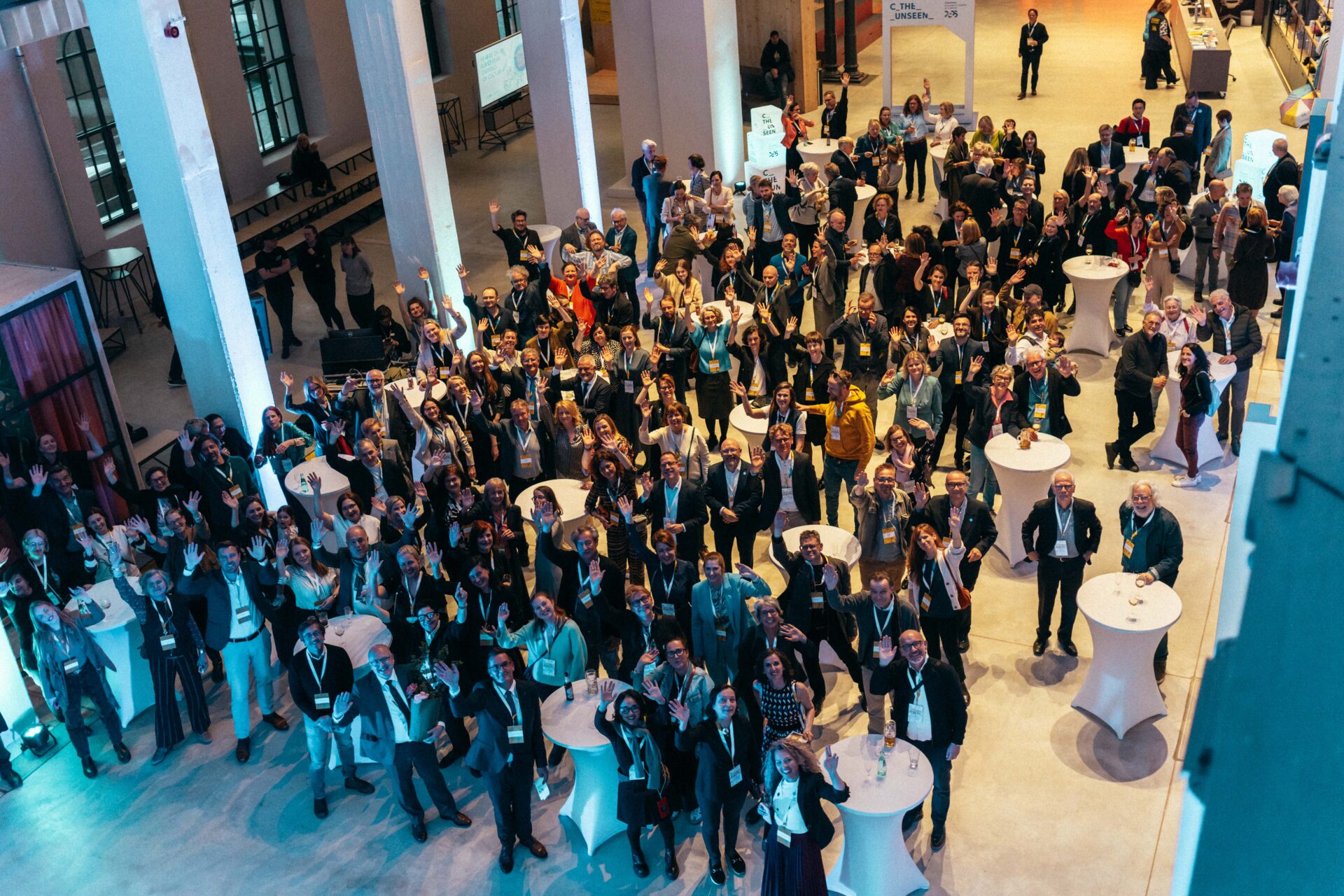
A full day of panels at the Carlowitz Congresscenter was devoted to the evolution of the ECoC project and its challenges. After the presentation of the White Book, participants broke into working groups to discuss organizational matters, cultural policy, capacity building, and future directions. The evening concluded with a formal gala, and on Saturday, participants had the opportunity to visit key ECoC-related sites in Chemnitz, such as the Garagen-Campus and Stadt am Fluss. Lublin was represented by the Mayor’s Plenipotentiary for the European Capital of Culture and the ECoC Curatorial Council.

fot. Marta Ryczkowska

The conference also provided an opportunity to review the program’s achievements so far and set new goals, emphasizing the role of culture in the integration and development of European cities. For Lublin 2029, this is of immense value – especially at this stage of our preparations for the title year.

fot. Ernesto Uhlmann