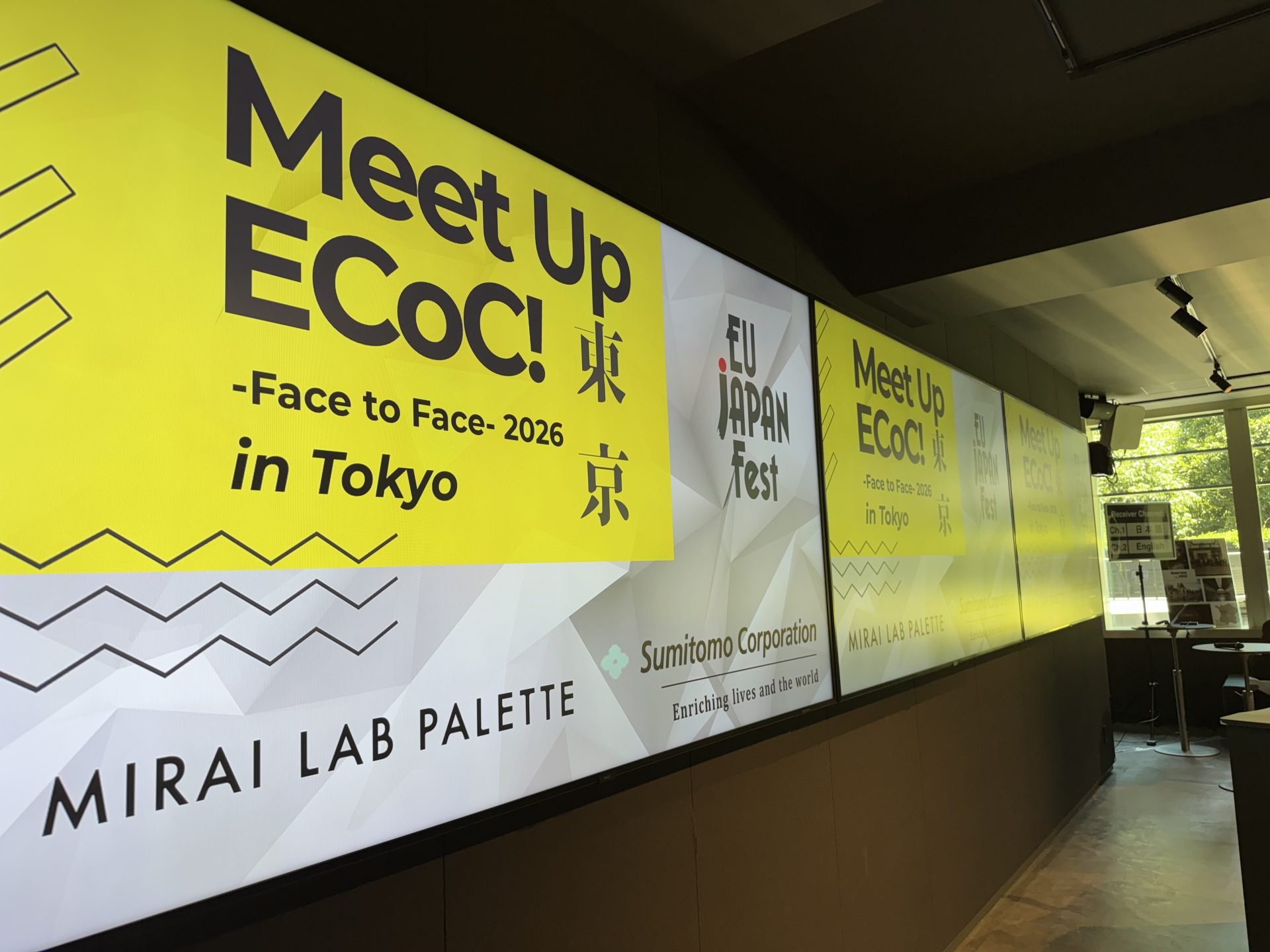
Culture has an inherent quality of boundlessness and the power to connect cities separated by thousands of kilometres. Japan is a particularly important example of our intercultural and international activities. Shortly after winning the European Capital of Culture competition, we established cooperation with EU Japan Fest, which we have been consistently developing for the past year and a half. Thanks to these relationships, we are able to benefit from mobility programmes – creators of projects submitted as part of the ECoC application are embarking on study visits that support the implementation of ideas outlined in the Lublin bid book.
Once a year, EU Japan Fest invites representatives of current and future European Capitals of Culture to the unique Meet Up ECoC! – Face to Face gathering, creating an opportunity for direct exchange with the Japanese cultural and business sectors. These meetings have significant professional and networking value: they facilitate knowledge sharing, the creation of international partnerships and the co-designing of future artistic initiatives. It is here that ideas for joint projects, artistic residencies, exchange programmes and long-term cooperation between Europe and Japan are born. Since 1992, EU Japan Fest has consistently maintained a network of European-Japanese connections, supporting cities holding the ECoC title by linking them with Japanese artists, cultural institutions and business partners. The main goal and mission of EU Japan Fest is to address global social challenges through culture and the arts. Currently, the organisation’s activities are based on several key pillars: empowering young people, coexistence with nature, social regeneration and diversity.
This year’s Meet Up ECoC! – Face to Face was exceptional: it was not limited solely to Tokyo but also included Okinawa, which represents a distinct story in terms of the structure of its cultural sector and its international networks. The Lublin delegation’s visit therefore aimed to explore the cultural environment both from the perspective of the centre and the periphery, as well as to gain a deeper understanding of local contexts through visits to artists’ studios, arts and crafts museums, memorial sites and places of cultural significance.
During the international delegation to Tokyo and Okinawa, the Lublin 2029 European Capital of Culture Re:Union programme was presented several times, including during the international discussion panel Creative Future Creation Challenged by European Capitals of Culture. This was one of the key moments of the programme, dedicated to the role of European Capitals of Culture in addressing contemporary social challenges. The panel brought together representatives of Oulu 2026, Trenčín 2026 and Lublin 2029, who presented their cities’ development strategies and approaches to using culture as a tool for building social resilience, strengthening local communities and stimulating solutions in times of polycrisis. The organisers ensured that we had the opportunity to explore contemporary cultural strategies in Tokyo. During a full-day conference session, we examined the operational models and curatorial approaches of the Watari Museum of Contemporary Art, as well as the relationships between art, architecture and urban space through the concept of Sono Aida (Between) by Akira Fujimoto. We met artists, curators and representatives of cultural institutions from Japan and Europe. Equally important was the opportunity for ECoC representatives to exchange ideas and reflect together on projects that combine local ECoC contexts with Japanese inspirations. The study visit was filled with dozens of meetings with potential partners, visits to museums and cultural institutions, and encounters with inspiring examples of combining heritage, new technologies and artistic practices. Particularly valuable were experiences related to heritage protection, the development of creative industries and the use of culture to revitalise urban spaces – themes that are also highly relevant for Lublin and the emerging Creative District.
The most important element of the Okinawa visit was participation in the Meet Up ECoC! – Face to Face 2026 in Okinawa, organised by the EU-Japan Fest Japan Committee in cooperation with the Okinawa Prefectural Government and local partners. It was the first edition of this format organised outside Tokyo. During the meeting, the programme of European Capital of Culture Lublin 2029 Re:Union was presented, with particular emphasis on the role of culture as a tool for building social resilience and intercultural dialogue. The discussion also highlighted the importance of strengthening local craftsmanship and integrating it into the context of contemporary art. Traditional crafts and local practices can become a foundation for contemporary creative industries – an approach that we had the opportunity to observe through numerous examples in Okinawa. A key experience was learning about the model of protecting and using Okinawa’s cultural heritage as a living resource for social and economic development. We visited some of Okinawa’s most important cultural heritage centres, including the Okinawa Prefectural Museum & Art Museum, Shurijo Castle Park (a symbol of the former Ryukyu Kingdom), Shiroma Bingata Studio, Sakima Art Museum, Okinawa Crafts Industry Promotion Center, Kogei no Mori, Okinawa Karate Kaikan and Peace Memorial Park.
The journey to Japan demonstrated that diverse cultural heritage is an active resource for the future and serves to strengthen communities. Awareness of complex and difficult historical processes goes hand in hand with creative approaches to solving contemporary challenges. The visit also highlighted the enormous power of private patronage in the development and promotion of culture. Cooperation between the public sector, the private sector and artists is essential for sustainable development processes, and the Japanese cultural scene provides a vivid example of this model. We return with new contacts, ideas and partnerships that we will continue to develop on the road towards European Capital of Culture Lublin 2029.