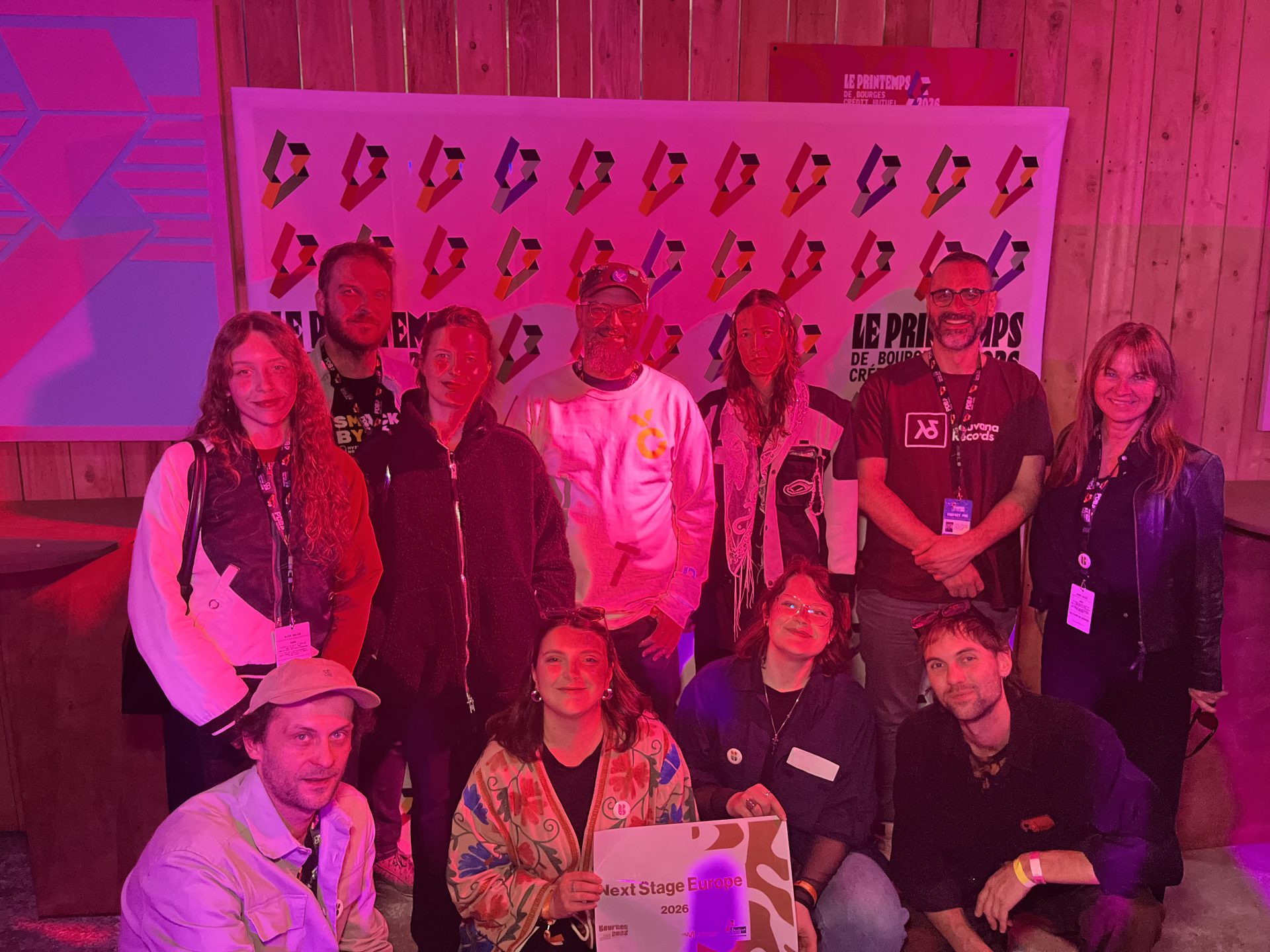
Participating in the 50th edition of Printemps de Bourges (14th – 19th April, 2026) turned out to be much more than simply attending one of the most important music festivals in France. It was an intense, inspiring experience that showed how many opportunities European cultural cooperation provides today, and demonstrated a pivotal role medium-sized cities can play in setting up international artistic projects. For me, it was also an important reference point in the context of the activities of the Lublin Jazz Festival, the Centre for Culture in Lublin and the preparations for the European Capital of Culture Lublin 2029.
From the very first days, I could feel the unique energy of this place. For years, Printemps de Bourges has been drawing many artists, producers, managers, curators and representatives of cultural institutions from all over Europe. Apart from hosting concerts, it is a space where discussions about the future of culture, new models of cooperation and common European challenges also play a crucial role. Much of the stay revolved around meetings devoted to building long-term international partnerships, supporting young artists and creating programs based on real cooperation between institutions from different countries. Discussions on financing culture, organizing large-scale events and ways of engaging local communities proved particularly valuable. It is at such meetings that projects are born, which a few years later become important European undertakings.
Among the most fruitful meetings during my stay in Bourges were conversations with people who really co-create the directions of the development of contemporary European culture. Particularly valuable was the meeting with Pascal Keiser and Louise Tournillon who designed together the ECoC Bourges 2028 candidacy, which serves as one of the tools for engaging residents and participants of the European Capital of Culture programme; as well as Boris Vedel, Managing Director of Le Printemps de Bourges. Conversations with the people responsible for such significant projects allowed us to better understand how to effectively combine an ambitious, long-term vision of cultural development with everyday organisational practice, attracting an audience and creating lasting relationships between institutions, artists and residents.
A fundamental element of the visit was the meetings with representatives of cities completing the European Capital of Culture programme. Particularly inspiring were the talks with Tessa Melzer from Bourges 2028, the delegation of the European Capital of Culture Trenčín 2026 – Martin Mojžiš, Laura Magičová and Pavol Čižmár and Linda Netland representing the European Capital of Culture Bodø 2024. The exchange of experiences showed how many common challenges and opportunities medium-sized cities face, which build their visibility, strengthen local identity and attract international partners thanks to culture.
These conversations were particularly valuable in the context of preparations for Lublin 2029. They showed that the success of the European Capital of Culture does not depend solely on the size of the city or the budget, but above all on a consistent vision, the courage to cooperate and the engagement of residents. Bourges is an extremely inspiring example in this respect – it is a city that shapes its future thanks to culture. Additionally, the active support of local authorities, including the mayor himself, makes cultural activities an important element of the development strategy for the whole city. This experience gives hope and shows that Lublin also has the potential to indeed mark its presence on the European map through culture.
The panel discussion on the mental health of artists was also extremely meaningful. In the music and culture industry, it is more and more noticeable that behind stage success there is often enormous pressure, job insecurity, an intense lifestyle and the need to constantly meet high expectations. This topic resonated strongly in the context of young artists at the beginning of their artistic journey. The discussion showed that taking care of mental well-being is no longer just an additional element of cultural policy, as it becomes one of the foundations of a responsible and modern cultural sector.
Another vital point of the programme was also visiting Antre Peaux – an independent cultural centre operating in post-industrial spaces. This place shows that innovative artistic activities do not have to be created only in large institutions. In fact, it is quite the opposite – it is often grassroots initiatives, firmly rooted locally, that become laboratories of new ideas and important centres of creative experimentation.
The festival features over 150 performers across 11 stages and attracts about 250,000 participants. Bourges turned into a true musical capital of France. It is difficult to describe even a small part of the program, because music fills every space – large stages, clubs, bars, the squares and streets of the city. The use of post-industrial infrastructure and huge concert halls gives the event a modern, dynamic character which is also particularly impressive.
I spent the most time at the iNOUïS stage, which for years has been considered one of the most interesting places to discover new talents. It is a remarkable supporting programme for young artists, based on a network of 28 regional branches in France and Francophone countries and more than 350 professionals who throughout the year are looking for artists who can shape the future of the music scene. That’s where I heard the most exciting concerts of the festival – from French hip-hop, through jazz-rock and math rock, to sounds mixing rap, rock and heavy metal altogether. The performances that particularly stayed with me were those by Free Zorba The Hooligan, Cheap Jewels, Holyteeth, and Sahëlie. It is such concerts that remind us that the most interesting musical phenomena are often born before they reach the largest stages.
The invitation to participate in the event was possible thanks to the Next Stage Europe initiative, run by Bourges 2028. It is an open platform enabling artists from other European Capitals of Culture to present their work during the festival. The initiative is a perfect example of how the idea of a European Capital of Culture can translate into a real artistic exchange, establishing contacts and developing lasting cooperations between cities.
The trip also had a huge networking value. Meetings with representatives of music circles and institutions such as IRCAM, as well as numerous conversations with organizers, producers and cultural animators from different parts of Europe created a space for establishing many new contacts and talks about future joint activities.
I am leaving Bourges with the feeling that European culture is currently at an extremely interesting stage. There is a great need for cooperation, exchange of experience and setting up projects across borders. At the same time, the role of cities such as Lublin – ambitious, creative and ready to co-create international cultural networks – is becoming more and more apparent. Printemps de Bourges has shown that the future of culture is not created only in the largest metropolises. It is very often born in places like Bourges where passion, courage, local energy and a European perspective meet. This experience is not only a valuable source of inspiration; it also gives real hope for new partnerships, projects and opportunities for cooperation on the way to Lublin 2029.
Written by:
Adam Szczepanek
Translated by Zofia Świerszcz
Proofread by Aleksandra Górecka